


You may also like
-
Adiantum cuneatum Poster
Anna Atkins · 1850 · Prussian-blue cyanotype print featuring a delicate white fern with lace-like fronds
Poster from £9 · Framed from £16
Regular price From £6.00Regular price -
Adiantum tenerum Poster
Anna Atkins · 1850 · Delicate cyanotype fern print with crisp white fronds on deep blue ground
Poster from £9 · Framed from £16
Regular price From £6.00Regular price -
Fern Poster
Anna Atkins · 1850 · Classic cyanotype fern print with crisp white fronds on deep blue
Poster from £9 · Framed from £16
Regular price From £6.00Regular price -
Ceylon Poster
Anna Atkins · 1850 · Luminous fern print in classic cyanotype blue with delicate white botanical silhouettes
Poster from £9 · Framed from £16
Regular price From £6.00Regular price


-

"Very nice Posters. The quality is amazing and we received it very quickly !"
-

"A shop to visit absolutely. Huge selection of posters. We spent more than an hour there !"
-

"Perfect to find gift. Price are very good. An they can frame and pack it on site"


About the Artist
Anna Atkins was a British botanist and one of the earliest pioneers of photography. Working in the mid nineteenth century, she used the cyanotype process to make direct contact prints of plant specimens, producing images that sit between scientific record and poetic design. Her work is considered foundational in both the history of photography and botanical illustration, and her cyanotypes remain highly regarded by collectors and historians alike.
Atkins’s innovative approach to documenting nature coincided with a period of intense scientific discovery and exploration, when visual records became vital for study and classification. Her legacy endures as a bridge between science and art, inspiring generations of artists and naturalists.
The Artwork
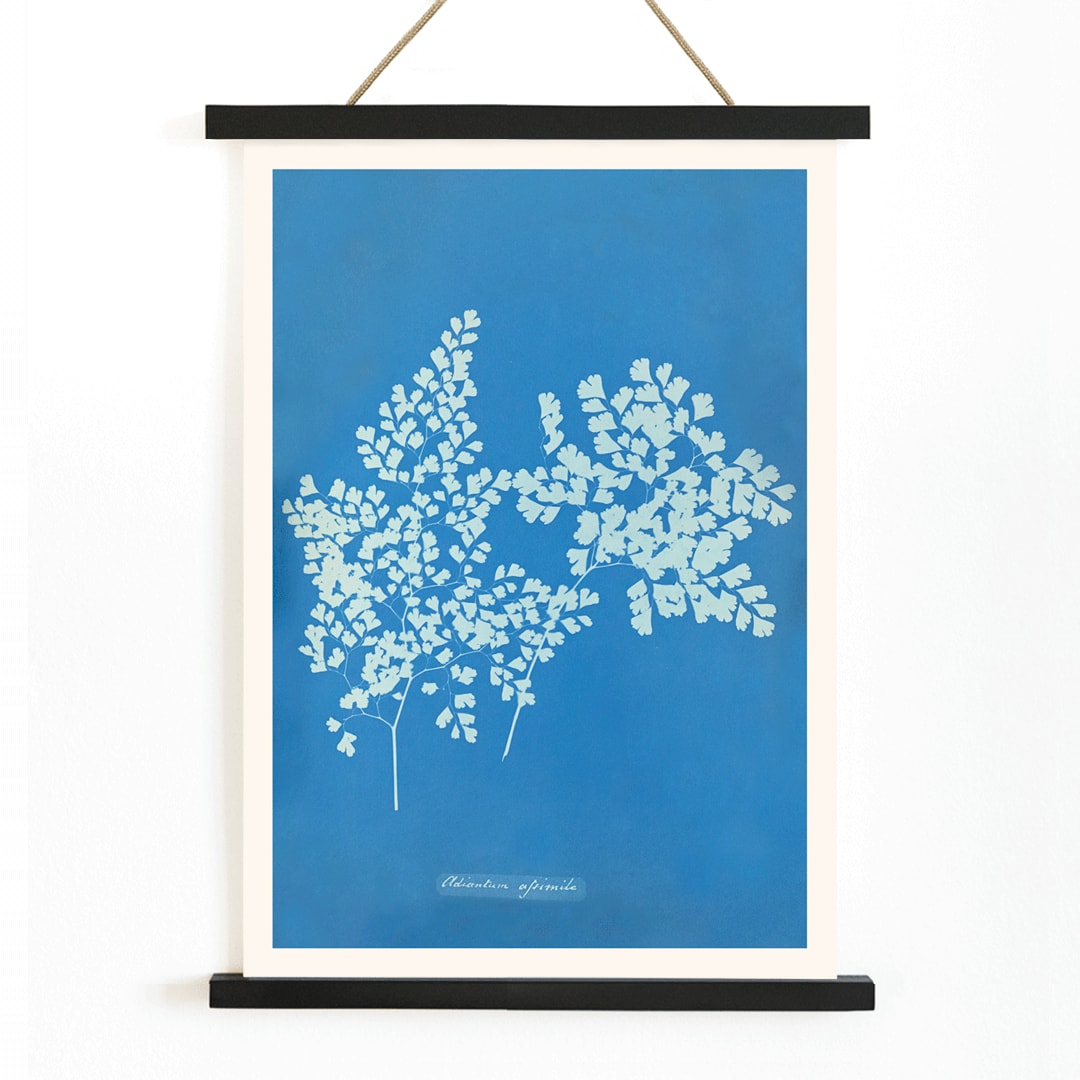
Created during the Victorian era’s fascination with botany, this cyanotype of Adiantum assimile reflects a time when plant collecting and classification were popular pursuits. Atkins’s use of the cyanotype process allowed for accurate and reproducible images, supporting the spread of botanical knowledge. Works like this were often included in early photographic books, making scientific information more widely accessible and visually engaging.
The fern motif also speaks to the Victorian craze for ferns, known as pteridomania, which saw enthusiasts collecting and studying these plants with great enthusiasm. This print stands as both a scientific document and an artistic expression of that era’s curiosity and reverence for the natural world.
Style & Characteristics
The artwork features a delicate fern specimen rendered in crisp white against a rich, saturated Prussian blue background, characteristic of the cyanotype technique. Each leaflet is finely detailed, creating an intricate, lace-like silhouette that highlights the plant’s natural structure. The composition is balanced and symmetrical, with the frond centrally placed and elegantly displayed.
The overall effect is serene and contemplative, with luminous contrasts that draw the eye. For more examples of early photographic techniques and scientific illustration, explore our photos and science collections.
In Interior Design
This botanical print brings a sense of calm and sophistication to interiors, working beautifully with light woods, neutral textiles, and white or grey walls. Its cool blue tones make it a striking focal point in minimalist, Scandinavian, or classic spaces, and it pairs well with ceramics and brushed metals.
Display it alone for a refined statement or combine it with other botanical prints to create a harmonious gallery wall. Its timeless aesthetic appeals to both nature enthusiasts and lovers of vintage photography.