


You may also like
-

Birds and sunset Poster
Katsushika Hokusai · 1814 · Serene poster of cranes flying toward a red sun over a warm beige sky
Poster from £9 · Framed from £16
-

Sarus crane in rice field Poster
Unknown artist · 1884 · Graceful Sarus crane vintage print poised among rice stalks with warm beige calm
Poster from £9 · Framed from £16
-

Yachigusa Pl.23 Poster
Seikō Ueno · 1902 · Vivid red vintage print with white cranes gliding in a bold textile motif
Poster from £9 · Framed from £16
-

Red crown crane Poster
Ogata Korin · 1687 · Elegant red crowned crane art print set against a luminous gold field
Poster from £9 · Framed from £16


-

"Very nice Posters. The quality is amazing and we received it very quickly !"
-

"A shop to visit absolutely. Huge selection of posters. We spent more than an hour there !"
-

"Perfect to find gift. Price are very good. An they can frame and pack it on site"


About the Artist
Kōno Bairei was a Kyoto-based Japanese painter and teacher active during the Meiji era, renowned for his mastery of bird-and-flower subjects within the kachō-ga tradition. His work bridged classical Japanese aesthetics and modern sensibilities, and his drawing albums influenced generations of artists and printmakers. Bairei’s dedication to capturing the spirit of nature with elegance and restraint made him a pivotal figure in the evolution of Japanese painting.
For those interested in refined Japanese wildlife imagery, Bairei’s legacy endures in our Japanese art prints and among the works of famous artists celebrated for their timeless appeal.
The Artwork
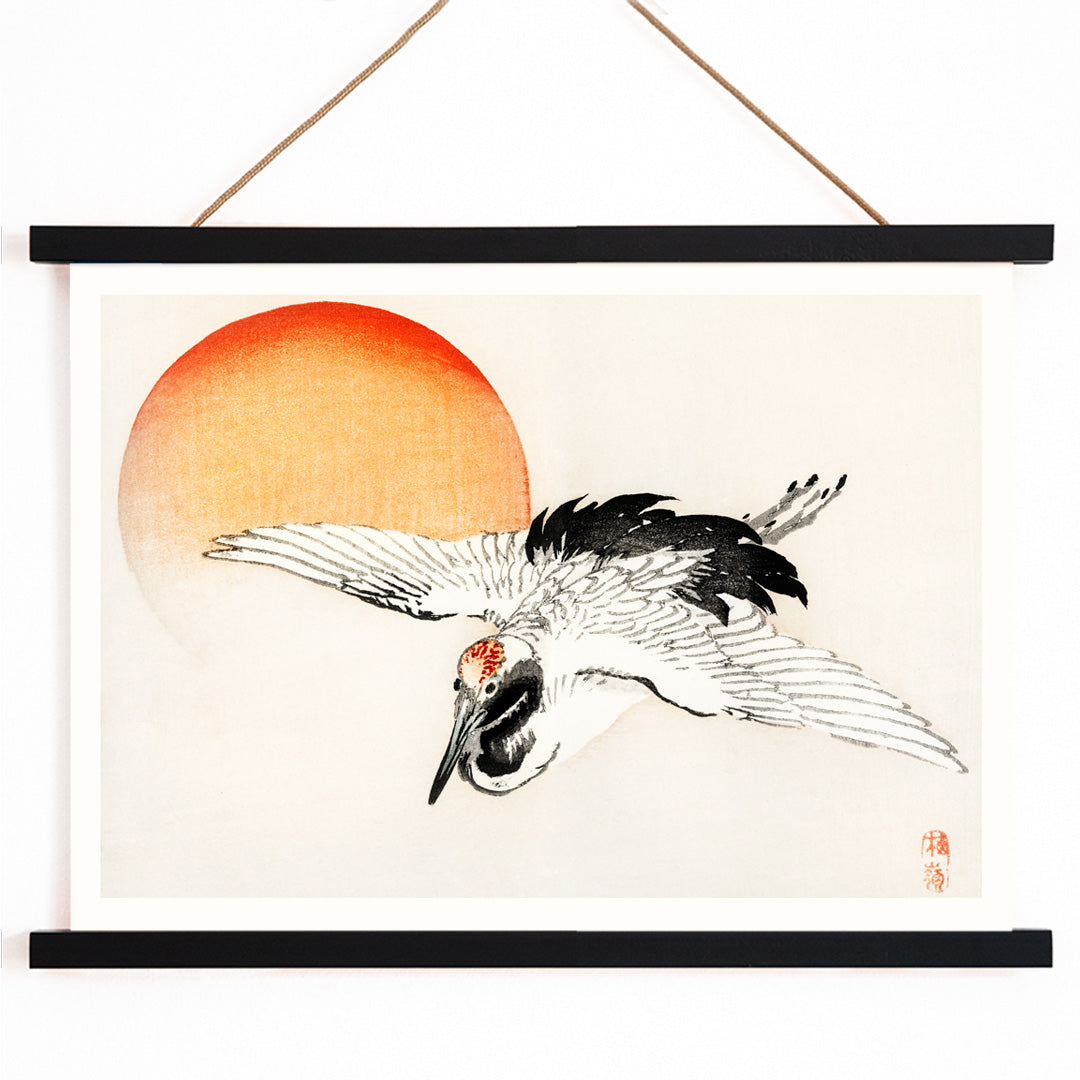
This depiction of a flying crane reflects the deep symbolism of longevity and good fortune in Japanese culture, especially resonant during the late nineteenth century as Japan balanced tradition and modernization. Cranes often appeared in art and poetry as auspicious messengers, embodying hope and continuity in times of change. The motif was popular in Meiji-era prints, serving both as decorative art and as a reminder of enduring cultural values.
Such images were designed to bring a sense of serenity and connection to nature into daily life, making them cherished elements in Japanese households and collections. The crane’s upward flight here subtly suggests aspiration and renewal, themes that held particular meaning in a rapidly evolving society.
Style & Characteristics
The artwork features a single crane in mid-flight, rendered with spare, expressive ink lines against a clean white background. A bold orange sun disk anchors the composition, providing a striking contrast and focal point. The palette is limited to black, white, and warm orange, emphasizing clarity and simplicity.
Delicate linework defines the crane’s feathers and wings, while the generous use of negative space enhances the sense of movement and tranquility. The overall effect is both minimalist and evocative, characteristic of East Asian art and well-suited to contemporary interiors.
In Interior Design
This art print complements Japandi, minimalist, or Scandinavian interiors, where open space and natural textures echo the artwork’s calm restraint. It can serve as a serene focal point in an entryway, bedroom, or office, where the image of the soaring crane inspires clarity and optimism.
Pair it with warm neutrals, light wood, and subtle terracotta accents to echo the sun motif. For a cohesive look, combine it with black and white wall art and curated animal posters for a harmonious gallery wall.