


You may also like
-

Colourful and surreal illustrations of fishes 2 Poster
Louis Renard · 1754 · Vivid tropical fish scientific print featuring bold stripes and whimsical specimen arrangement
Poster from £9 · Framed from £16
-

Colourful and surreal illustrations of fishes 6 Poster
Louis Renard · 1754 · Surreal tropical fish vintage print with vibrant colors and precise natural history linework
Poster from £9 · Framed from £16
-

Colourful and surreal illustrations of fishes 4 Poster
Louis Renard · 1754 · Surreal tropical fish print with bold hand-colored forms on a clean specimen page
Poster from £9 · Framed from £16
-

Colourful and surreal illustrations of fishes 7 Poster
Louis Renard · 1754 · Surreal tropical fish print with bold stripes and fantastical fins on white
Poster from £9 · Framed from £16


-

"Very nice Posters. The quality is amazing and we received it very quickly !"
-

"A shop to visit absolutely. Huge selection of posters. We spent more than an hour there !"
-

"Perfect to find gift. Price are very good. An they can frame and pack it on site"


About the Artist
Louis Renard was a Dutch publisher and natural history compiler active in Amsterdam, celebrated for bringing exotic marine imagery to European readers. His fish plates belong to the eighteenth century world of cabinets of curiosity, when collectors prized rare specimens and illustrated atlases served as both study tools and status objects.
This 1754 example reflects the period taste for wonder as much as taxonomy, where observation, secondhand reports, and artistic license could coexist on the same page. Today, Renard remains a key name for collectors of early marine illustration and decorative natural history wall art.
The Artwork
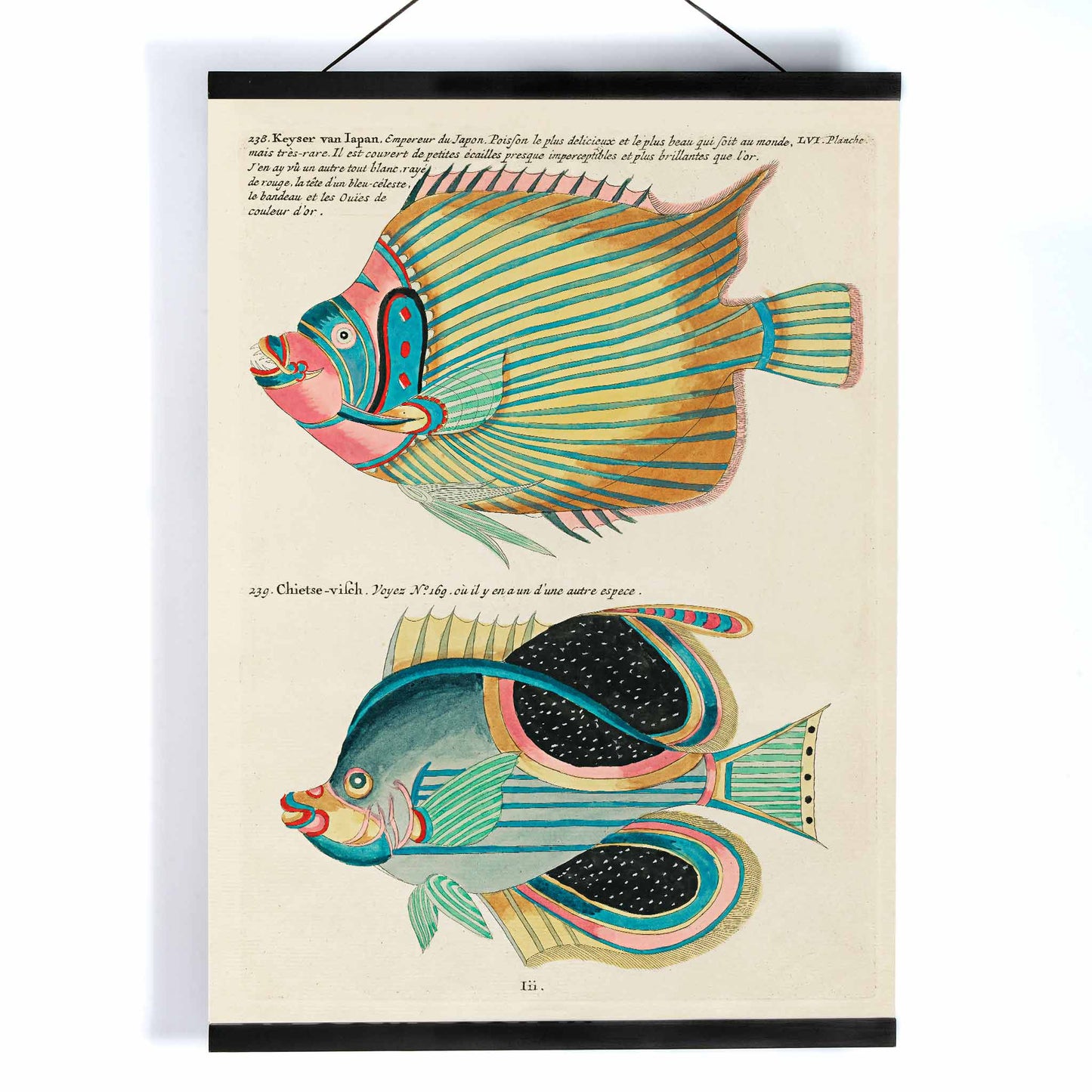
Created during the Age of Enlightenment, this illustration channels European fascination with the waters of Southeast Asia and the broader East Indies, a region that fueled trade, science, and imagination. Such images helped readers picture unfamiliar species arriving through ports, merchants, and sailors, turning travel knowledge into a portable reference.
At the same time, the plate carries the spirit of storytelling: the sea as a place where credible observation meets rumor and marvel. As a vintage print for a gallery wall, it celebrates that historical moment when natural history books functioned like both field guides and dream catalogs.
Style & Characteristics
The composition presents fish in clear profile against an open, light background, giving the page a studied, specimen-like calm. Fine black linework defines fins and scales, while broad, confident color fills create a striking graphic presence.
In this plate, saturated blues, pinks, yellows, and greens read as intentionally heightened rather than strictly naturalistic, producing a surreal, almost theatrical mood. The result is scientific imagery with decorative bite, ideal for anyone drawn to sea and ocean wall art that feels rare and slightly uncanny, and for collectors browsing science prints with historical character.
In Interior Design
This fine art print works especially well in a living room, study, or hallway where close viewing rewards the intricate patterns. It also suits a kitchen or dining area, echoing the culinary and coastal associations of fish without feeling like generic nautical decor.
Pair it with warm neutrals, pale wood, or crisp white walls to let the colors carry the room, or repeat blue and pink accents for a cohesive scheme. Framed simply, it complements modern eclectic interiors and classic curiosity cabinet styling, and it layers beautifully with animal art prints for a playful, informed interior decoration story.