


You may also like
-

Colourful and surreal illustrations of fishes 9 Poster
Louis Renard · 1754 · Fantastical tropical fish print with jewel-like markings on an antique plate
Poster from £9 · Framed from £16
-

Colourful and surreal illustrations of fishes 4 Poster
Louis Renard · 1754 · Surreal tropical fish print with bold hand-colored forms on a clean specimen page
Poster from £9 · Framed from £16
-

Surreal illustrations of fishes Poster
Louis Renard · 1754 · Vivid exotic fish print with hand-colored details and theatrical natural history style
Poster from £9 · Framed from £16
-

Colourful and surreal illustrations of fishes 6 Poster
Louis Renard · 1754 · Surreal tropical fish vintage print with vibrant colors and precise natural history linework
Poster from £9 · Framed from £16


-

"Very nice Posters. The quality is amazing and we received it very quickly !"
-

"A shop to visit absolutely. Huge selection of posters. We spent more than an hour there !"
-

"Perfect to find gift. Price are very good. An they can frame and pack it on site"


About the Artist
Louis Renard was a Dutch publisher and natural history author active in the early eighteenth century, renowned for his illustrated volumes depicting marine life from the East Indies. At a time when European interest in exotic species was growing through expanding trade networks, Renard’s work offered a window into distant ecosystems. His publications bridged scientific curiosity and artistic imagination, making them significant for collectors of classic art prints and early natural history documentation.
This marine life plate reflects the era’s fascination with cataloguing the wonders of the natural world, as atlases and cabinets of curiosity transformed exploration into accessible knowledge.
The Artwork
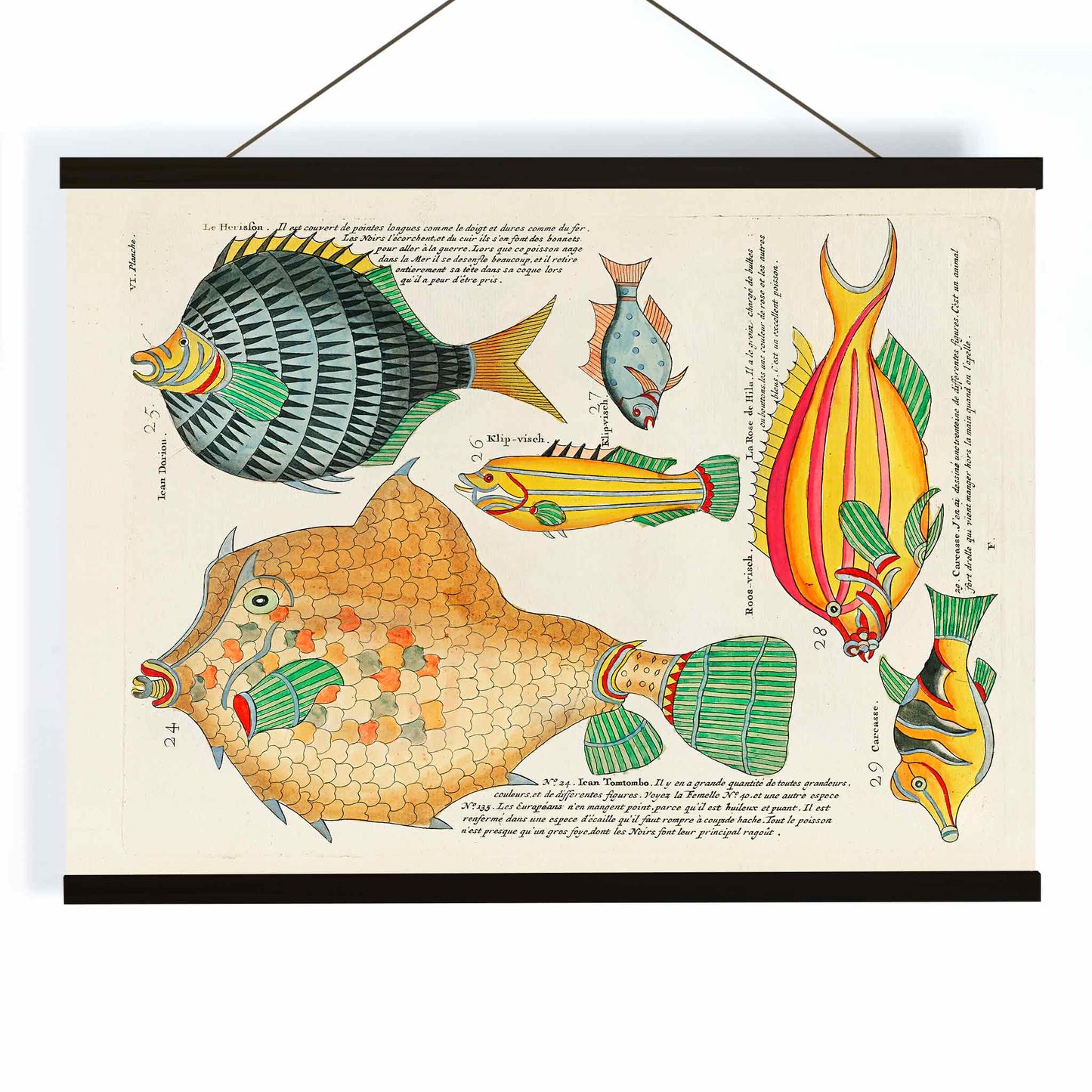
Completed in 1754, this illustration is part of Renard’s influential series portraying fish found around the Moluccas, a region pivotal to the spice trade. The series aimed to introduce European audiences to unfamiliar marine species, blending observation with creative embellishment. Some of the depicted colors and forms were considered exaggerated, fueling both scientific debate and public intrigue.
This print exemplifies how eighteenth-century viewers experienced the mysteries of the ocean through detailed engravings, long before the advent of underwater exploration technologies.
Style & Characteristics
The artwork displays several tropical fish arranged systematically against a pale, uncluttered background, reminiscent of a specimen plate. Each fish is outlined with precision and filled with bold, saturated hues—vivid oranges, greens, yellows, blues, reds, and pinks—that create striking visual contrast. The use of flat color areas and crisp lines lends the scene a slightly fantastical, theatrical quality.
The overall effect is playful yet meticulous, appealing to those interested in colorful vintage prints with a scientific flair. Discover more in our sea and ocean wall art and animal illustrations collections.
In Interior Design
This vintage print brings a lively, historic accent to coastal-inspired interiors, studies, or hallways, serving as a distinctive conversation piece. Its bright palette complements white walls, natural woods, and rattan, while also enlivening darker spaces such as library corners.
For a curated gallery wall, pair it with other eighteenth-century science prints or minimalist frames to let the unique marine forms stand out.