


You may also like
-

Bitter sweet oranges Poster
Pierre-Joseph Redouté · 1810 · Refined botanical print of bitter orange branch with fruit, leaves, and blossoms
Poster from £9 · Framed from £16
-

Pineapple Poster
Pierre-Joseph Redouté · 1805 · Refined pineapple print with crisp botanical detail and soft green-yellow tones
Poster from £9 · Framed from £16
-

Cactus Opuntia Poster
Pierre-Joseph Redouté · 1816 · Elegant prickly pear cactus print with luminous yellow flower and crisp botanical detail
Poster from £9 · Framed from £16
-

Orange bulbous lily Poster
Pierre-Joseph Redouté · 1805 · Luminous orange lily botanical print with poised stem, crisp leaves, and airy white ground
Poster from £9 · Framed from £16


-

"Very nice Posters. The quality is amazing and we received it very quickly !"
-

"A shop to visit absolutely. Huge selection of posters. We spent more than an hour there !"
-

"Perfect to find gift. Price are very good. An they can frame and pack it on site"


About the Artist
Pierre-Joseph Redouté, active in France during the late eighteenth and early nineteenth centuries, is celebrated as one of the most influential botanical illustrators in European history. His work bridged the worlds of science and art, earning him commissions from royal patrons and a lasting legacy in botanical publishing.
Redouté's meticulous approach helped standardize botanical illustration, making plant studies accessible and visually compelling for both scientists and art lovers. His illustrations continue to be admired for their precision and elegance, shaping the tradition of botanical art and vintage print collecting.
The Artwork
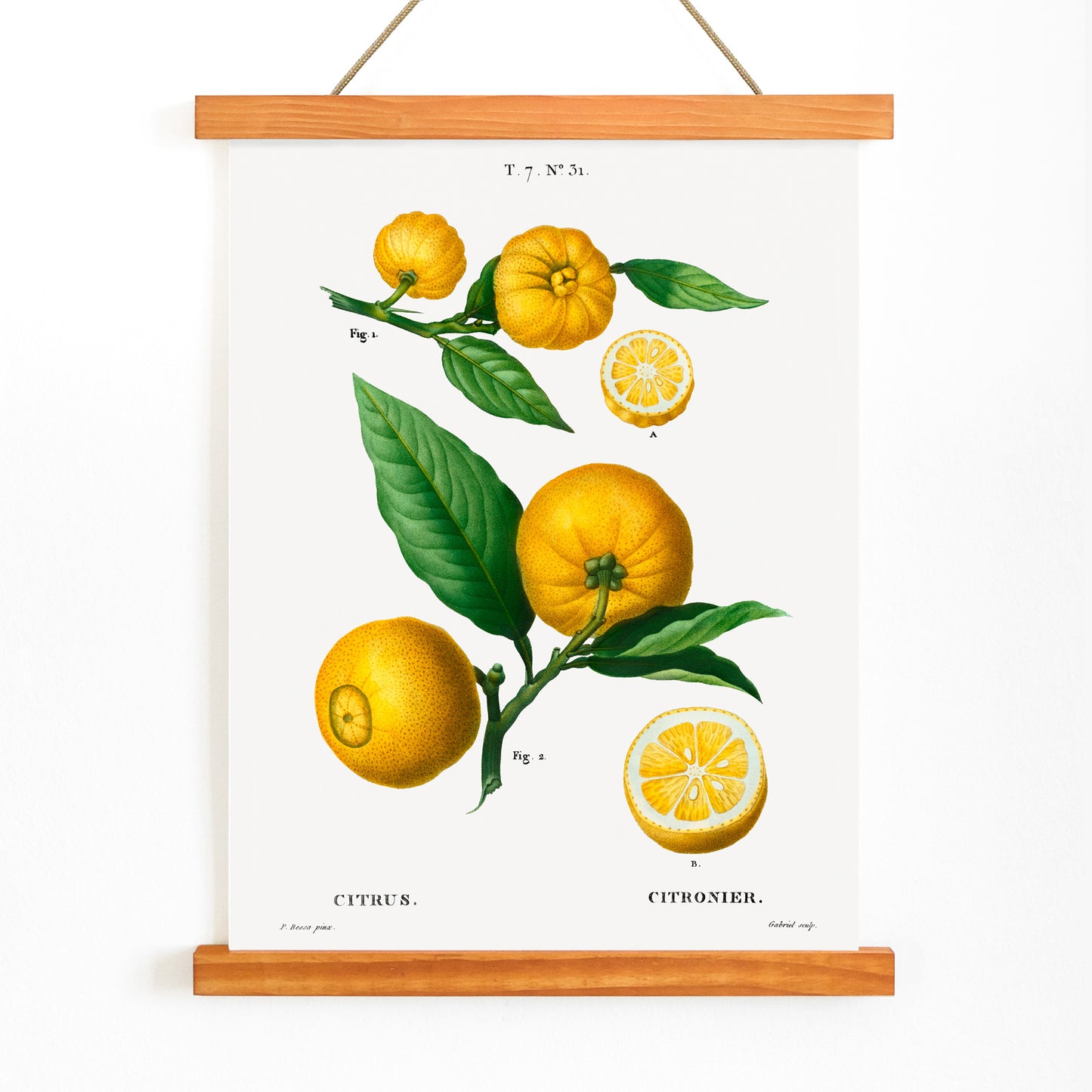
This 1810 citrus study was created at a time when botanical illustration played a vital role in cataloguing the expanding diversity of cultivated plants. As global exploration introduced new species to European gardens and orangeries, artists like Redouté documented these prized specimens for scientific reference and horticultural education.
Such works were valued not only for their accuracy but also for their ability to convey the allure of exotic fruits, reflecting the era's fascination with nature, health, and the art of cultivation. This print embodies the intersection of scientific inquiry and aesthetic appreciation that defined botanical illustration in Redouté's time.
Style & Characteristics
The composition features a branch of citrus with ripening yellow fruit, glossy green leaves, and delicate white blossoms, all rendered against a soft cream background. Redouté's technique combines precise linework with subtle gradations of color, creating a lifelike sense of volume and freshness.
The restrained palette of yellows, greens, and whites imparts an airy, luminous quality, while the careful arrangement invites close observation. The overall effect is one of clarity and natural grace, characteristic of early nineteenth-century botanical prints intended for both study and display.
In Interior Design
This botanical print lends a refined, uplifting touch to kitchens, dining areas, or sunlit entryways, where fruit imagery feels especially inviting. It pairs harmoniously with natural materials like wood, linen, and stone, and can soften minimalist or contemporary interiors with its gentle detail.
For a cohesive display, consider combining it with other works from the botanical prints or kitchen wall art collections. Those drawn to timeless imagery may also appreciate selections from classic art posters for a balanced, heritage-inspired arrangement.