


You may also like
-

Campanile di Pisa Poster
G.L. Taylor · 1837 · Precise architectural print of the Leaning Tower of Pisa in crisp monochrome
Poster from £9 · Framed from £16
-

Tour Eiffel 2 Poster
Unknown artist · 1925 · Striking black-and-white Eiffel Tower poster with crisp iron latticework and Paris skyline
Poster from £9 · Framed from £16
-

Big Tree Poster
Cornelis Steffelaar · 1825 · Quiet landscape art print centered on a monumental tree in soft grey tones
Poster from £9 · Framed from £16
-

St Denis Church Poster
Jan Weissenbruch · 1846 · Sunlit city-square art print centered on St Denis Church with blue sky and warm stone
Poster from £9 · Framed from £16


-

"Very nice Posters. The quality is amazing and we received it very quickly !"
-

"A shop to visit absolutely. Huge selection of posters. We spent more than an hour there !"
-

"Perfect to find gift. Price are very good. An they can frame and pack it on site"


About the Artist
Created by an anonymous artist, this work reflects the European tradition of architectural illustration that flourished during the late medieval period. Such images were often commissioned to document important civic and religious landmarks, serving both as records and as symbols of communal identity. In an era when cathedrals anchored the spiritual and social life of cities, artists contributed to a shared visual memory, even if their names were seldom recorded.
Anonymous works like this highlight the collective nature of much early art, where the focus was on the subject and its meaning for the community. Today, as a fine art print, it offers a window into the world of Gothic Paris and stands alongside other treasures in the realm of classic art prints.
The Artwork
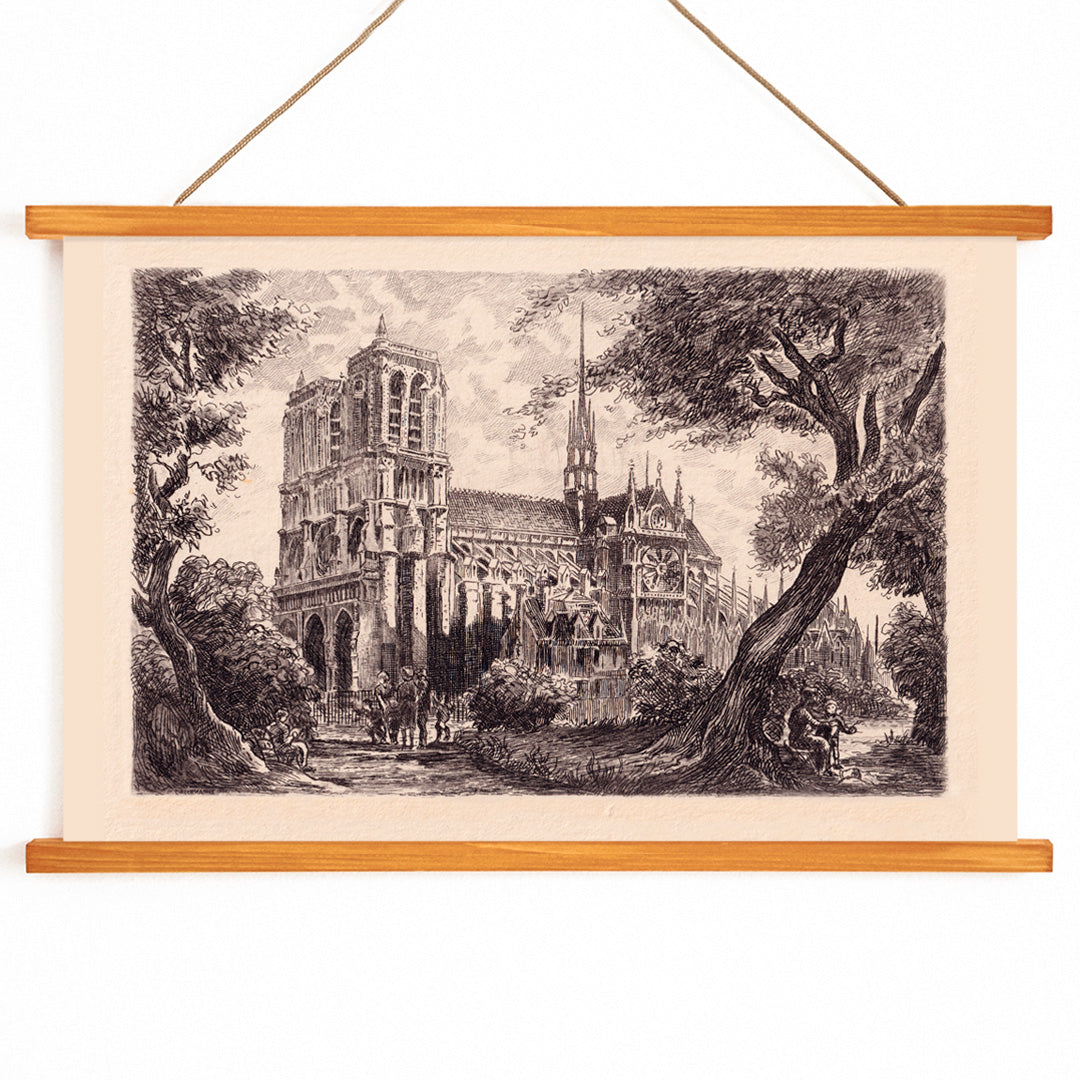
This depiction of Notre Dame de Paris captures the cathedral as it stood in 1482, a time when Paris was a vibrant center of religion, scholarship, and commerce. The cathedral was not only a place of worship but also a gathering point for public events and daily life, embodying the spirit of the city. Such architectural portraits were created to celebrate civic pride and to document the evolving urban landscape for future generations.
Serving as a visual anchor, Notre Dame becomes a symbol of Parisian identity and resilience. The artwork invites viewers to imagine the rhythms of medieval city life, offering a historical perspective that transcends nostalgia and connects us with the enduring presence of this iconic structure.
Style & Characteristics
The image is defined by its precise black linework, reminiscent of engraving or early printmaking techniques. The cathedral's facade dominates the composition, rendered with careful attention to architectural detail and proportion. The restrained palette of black ink on a light beige ground creates a striking contrast, emphasizing the structure's graphic qualities and vintage character.
The overall mood is contemplative and scholarly, appealing to admirers of black and white posters. The fine detailing encourages close inspection, making it a compelling choice for those who appreciate historic architecture and the artistry of early printmaking.
In Interior Design
This vintage print lends a sense of calm focus and cultural depth to living rooms, studies, or entryways. Its neutral tones complement minimalist and traditional interiors alike, pairing well with natural materials such as wood and linen.
Consider displaying it alongside beige toned wall art or within a curated gallery wall for added texture and interest. A simple mat and elegant frames will highlight the crisp lines, making it an ideal decorative piece for architecture enthusiasts and lovers of Parisian history.