


You may also like
-

Cannabis Plate 2 Poster
Unknown artist · 1876 · Detailed cannabis botanical print showing leaves, flower clusters, and seeds on aged paper
Poster from £9 · Framed from £16
-

Herbier Français Pl.117 Poster
Antoine Cusin · 1867 · Refined Hypericum androsaemum botanical print with crisp linework and soft yellow and green tones
Poster from £9 · Framed from £16
-

Nihon chikurui zufu Pl.08 Poster
Yasuyoshi Shirasawa · 1912 · Serene bamboo print with fine linework and soft green washes on beige paper
Poster from £9 · Framed from £16
-

Coffea arabica Poster
John Stephenson · 1836 · Detailed coffee plant botanical print with white flowers and ripening red berries
Poster from £9 · Framed from £16


-

"Very nice Posters. The quality is amazing and we received it very quickly !"
-

"A shop to visit absolutely. Huge selection of posters. We spent more than an hour there !"
-

"Perfect to find gift. Price are very good. An they can frame and pack it on site"


About the Artist
Created by an anonymous artist, this 1885 botanical plate is a product of the late 19th-century fascination with cataloguing the natural world. During this period, botanical illustration was essential for scientific study, allowing botanists, pharmacists, and educators to accurately identify and communicate plant characteristics across disciplines.
Though the illustrator's name is lost to history, the work is rooted in the tradition of meticulous science illustrations that bridged the gap between art and research. These images were valued not only for their accuracy but also for their quiet elegance, making them enduring favorites among collectors of vintage natural history.
The Artwork
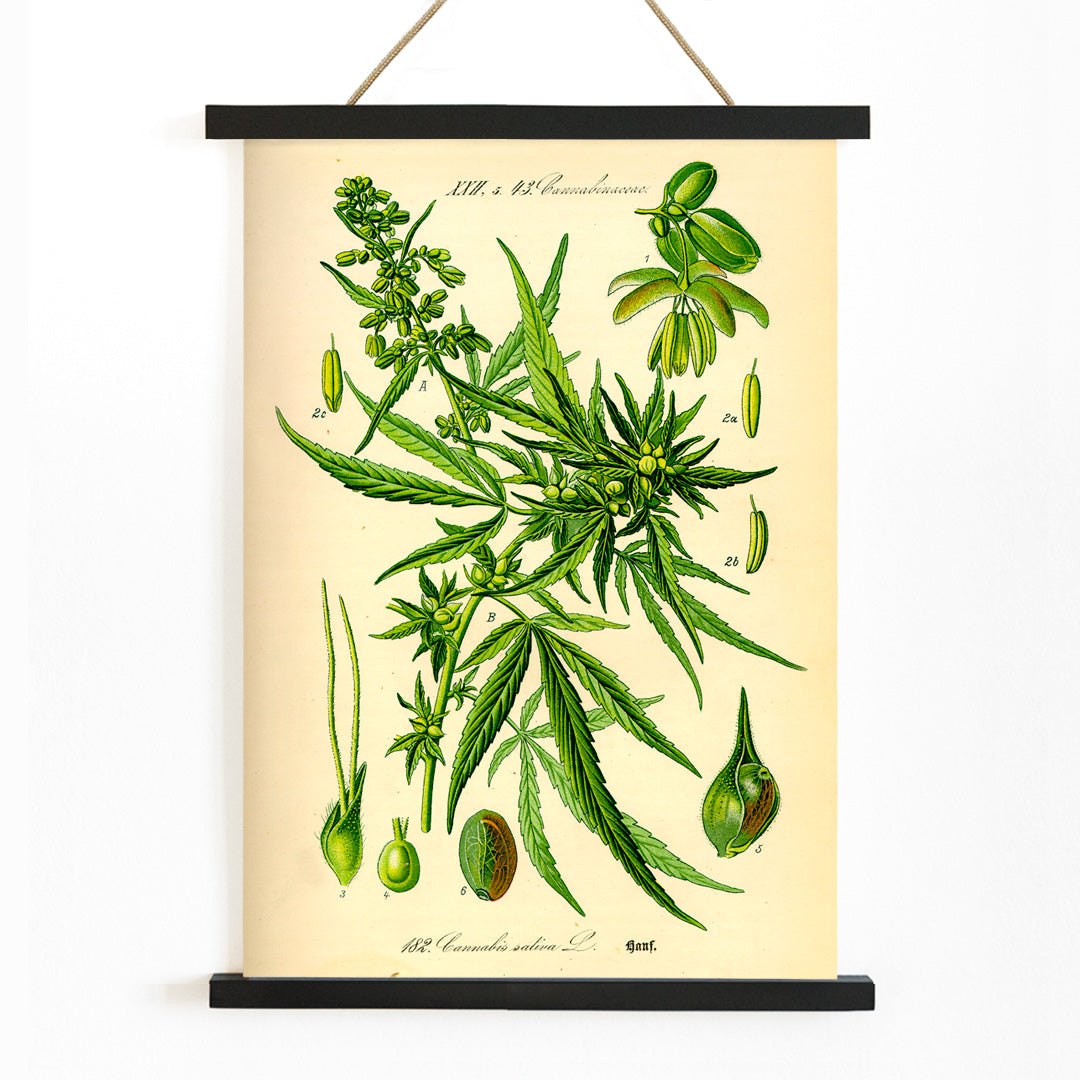
This plate presents Cannabis sativa as a subject of scientific inquiry, reflecting the educational mission of botanical atlases from the era. Such illustrations were created to aid in the recognition and classification of economically and medicinally important plants, supporting advances in fields like pharmacology and agriculture.
Intended for reference books and teaching portfolios, the artwork embodies the clarity and accessibility prized by 19th-century scholars. Its presence today enriches collections of botanical prints and vintage scientific imagery, offering a glimpse into the period's approach to plant study.
Style & Characteristics
The composition features a central, detailed rendering of the Cannabis sativa plant, with finely delineated leaves and separated botanical elements for close examination. The precise linework and subtle shading highlight the serrated leaf edges and slender stems, lending the print an archival, documentary quality.
The color palette is dominated by natural greens set against a warm beige background, creating a harmonious and understated contrast. The overall mood is calm and scholarly, making this vintage print well-suited for interiors seeking refined botanical art without overt embellishment.
In Interior Design
This botanical print integrates seamlessly into kitchens, studies, or reading nooks where natural history themes are appreciated. It can also serve as a focal point in a modern living room or as part of a curated gallery wall of vintage plates.
Pair it with black or wooden frames and natural textiles to enhance its archival feel, or combine it with green-toned wall art and soft neutrals for a cohesive look. Its versatility suits minimalist, classic, and eclectic interiors, especially for those who value scientific and botanical decor.