


You may also like
-

Cannabis Sativa Poster
Unknown artist · 1885 · Detailed Cannabis sativa botanical print with serrated leaves on warm beige paper
Poster from £9 · Framed from £16
-

Herbier Français Pl.117 Poster
Antoine Cusin · 1867 · Refined Hypericum androsaemum botanical print with crisp linework and soft yellow and green tones
Poster from £9 · Framed from £16
-

Nihon chikurui zufu Pl.08 Poster
Yasuyoshi Shirasawa · 1912 · Serene bamboo print with fine linework and soft green washes on beige paper
Poster from £9 · Framed from £16
-

Nihon chikurui zufu Pl.11 Poster
Yasuyoshi Shirasawa · 1912 · Japanese bamboo botanical print with slender stalks and airy leaves on cream
Poster from £9 · Framed from £16


-

"Very nice Posters. The quality is amazing and we received it very quickly !"
-

"A shop to visit absolutely. Huge selection of posters. We spent more than an hour there !"
-

"Perfect to find gift. Price are very good. An they can frame and pack it on site"


About the Artist
Created by an anonymous artist, this 1876 botanical plate reflects the golden age of printed natural history, when publishers commissioned meticulous illustrations to support botany, medicine, and agriculture. Many such images were produced by skilled draftspeople working alongside botanists, translating specimens into clear, comparable reference figures for readers.
Anonymity was common in scientific publishing, where accuracy mattered more than signature. Today, that restraint gives the image a timeless authority, ideal for those who appreciate vintage scientific illustration and botanical history.
The Artwork
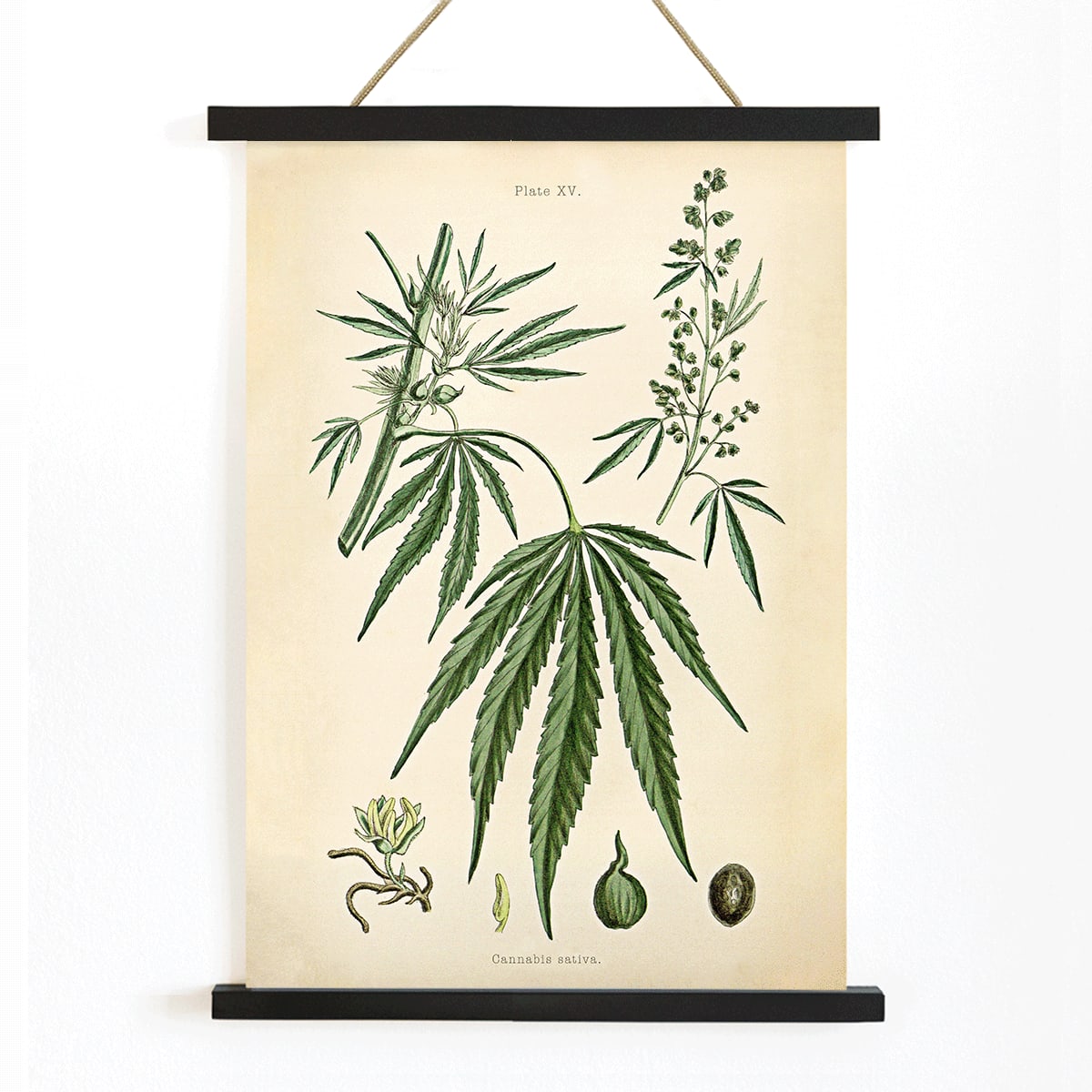
This nineteenth-century cannabis plate was produced during a period when economic botany was flourishing and plants were documented for their practical significance as well as their form. Cannabis sativa was of particular interest for its uses in fiber production, seed harvesting, and medicinal applications. Such plates served as essential references for growers, pharmacists, and educators, supporting accurate identification and understanding of plant species.
The plate exemplifies the era's drive to catalog and disseminate botanical knowledge, and fits naturally within a tradition of botanical prints that merge scientific inquiry with visual clarity. It stands as a testament to the value placed on precise illustration in nineteenth-century science.
Style & Characteristics
The composition centers a detailed cannabis plant, surrounded by smaller studies that highlight key botanical features such as leaves, flower clusters, and seeds. Fine linework and subtle shading ensure clarity and accuracy, with the green hues of the plant set against a softly aged beige background. The overall effect is measured and scholarly, typical of nineteenth-century botanical illustration.
This vintage print style appeals to collectors of science wall art and those drawn to the intersection of art and natural history. The muted palette and precise renderings create a calm, informative presence suitable for a range of interiors.
In Interior Design
This cannabis botanical print is well-suited to spaces that value focus and curiosity, such as a home office, reading nook, or study. Its gentle tones pair easily with natural materials like oak, walnut, or stone, supporting both modern and traditional decor schemes.
To create a cohesive look, echo the beige background with linen or cream textiles, and bring in green accents through plants or ceramics. A simple mat and frame from the frames collection will enhance its archival character and refined appeal.