


You may also like
-

Photographic camera patent Poster
E. Sauer · 1935 · Precision camera patent poster with crisp line diagrams on warm beige paper
Poster from £9 · Framed from £16
-

Photographic Camera Patent Poster
T.H Blair · 1887 · Detailed camera patent vintage print with crisp diagrams and numbered components
Poster from £9 · Framed from £16
-

Microscope Patent Poster
E. Bausch · 1899 · Precise microscope patent print with crisp labeled linework on warm beige paper
Poster from £9 · Framed from £16
-

Coffee Maker Patent Poster
F.E. Wolcott · 1934 · Technical coffee maker patent vintage print with crisp blueprint linework on warm beige
Poster from £9 · Framed from £16


-

"Very nice Posters. The quality is amazing and we received it very quickly !"
-

"A shop to visit absolutely. Huge selection of posters. We spent more than an hour there !"
-

"Perfect to find gift. Price are very good. An they can frame and pack it on site"


About the Artist
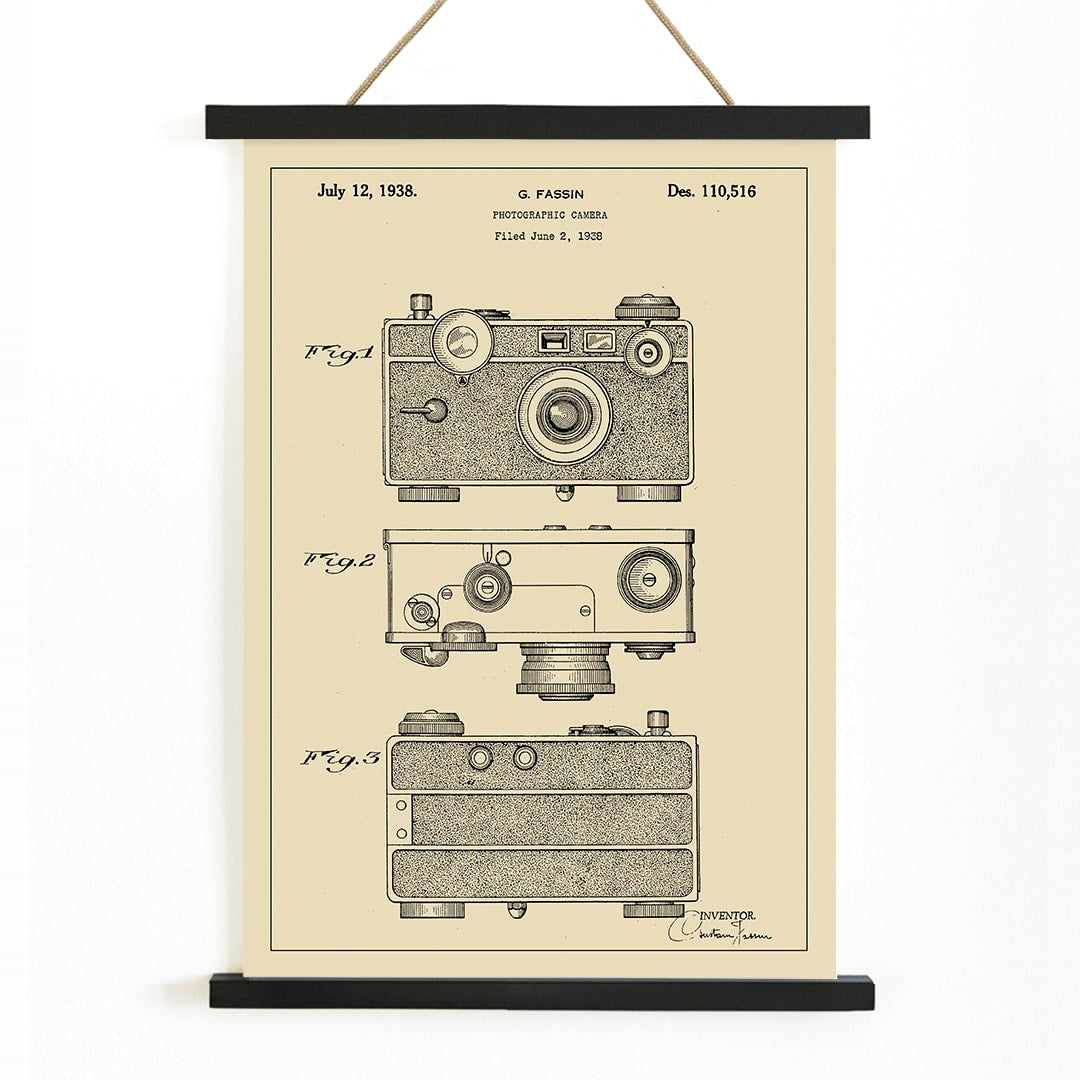
G. Fassin is credited as the draftsperson responsible for this patent illustration, a role that required both technical expertise and artistic clarity. In the early twentieth century, patent illustrators like Fassin played a crucial part in bridging invention and documentation, ensuring that new devices were recorded with legal precision and visual coherence. Their work reflects a unique intersection of engineering, design, and visual communication, capturing the spirit of innovation that defined the era.
For more examples of technical artistry, discover our science and invention wall art.
The Artwork
This 1938 Photographic Camera Patent print documents a moment when camera technology was evolving rapidly, making photography more accessible to the public. Patent drawings like this were created to provide an exact visual record of an invention’s structure and function, serving both legal and practical purposes. The artwork preserves a piece of technological history, offering insight into the meticulous process behind everyday objects and the inventive spirit of the pre-war period.
Beyond its technical purpose, this vintage print invites viewers to appreciate the often-overlooked craftsmanship that supports the art of photography.
Style & Characteristics
The print features a classic patent layout, with several numbered diagrams arranged for clarity and comparison. Fine black linework outlines the camera’s components, while precise labels and sectional views highlight the mechanical details. The composition is clean and methodical, emphasizing accuracy and order over decorative elements.
The warm beige background gives the piece a scholarly, archival feel, making it a natural addition to black and white decor or for those who appreciate minimalist wall art.
In Interior Design
This patent print is well suited to home offices, studios, libraries, or hallway gallery walls, where its structured design stands out. It complements minimalist, industrial, and modern interiors, and can also add a refined touch to traditional spaces when paired with wood or matte black frames.
The neutral palette of beige and black allows it to blend seamlessly with materials like concrete, steel, or walnut, making it ideal for anyone seeking a vintage technical print to inspire creativity or celebrate the history of photography.