


You may also like
-

Crimson topaz Poster
James Bolton · 1768 · Delicate natural history print pairing a crimson hummingbird with shells, butterflies, and cyclamen
Poster from £9 · Framed from £16
-

European robin Poster
James Bolton · 1768 · Delicate robin print perched among wild strawberry leaves and blossoms on clean paper
Poster from £9 · Framed from £16
-

Butterflies and Reeds Poster
Maurice Pillard Verneuil · 1899 · Art Nouveau poster of butterflies and reeds with flowing lines in green and yellow
Poster from £9 · Framed from £16
-

Five Butterflies Poster
Pieter Withoos · 1675 · Delicate insect print featuring five butterflies, a wasp, and two flies on pale ground
Poster from £9 · Framed from £16


-

"Very nice Posters. The quality is amazing and we received it very quickly !"
-

"A shop to visit absolutely. Huge selection of posters. We spent more than an hour there !"
-

"Perfect to find gift. Price are very good. An they can frame and pack it on site"


About the Artist
James Bolton was an English naturalist and illustrator active during the late 18th century, renowned for his detailed studies of flora and fauna. Working at a time when scientific exploration and classification were flourishing, Bolton contributed to the growing body of natural history knowledge by transforming specimens into finely observed illustrations. His works were prized by collectors and scholars alike, serving both educational and decorative purposes in the age of Enlightenment discovery.
For more in this spirit, browse our science posters and prints and discover highlights from our selection of vintage wall art.
The Artwork
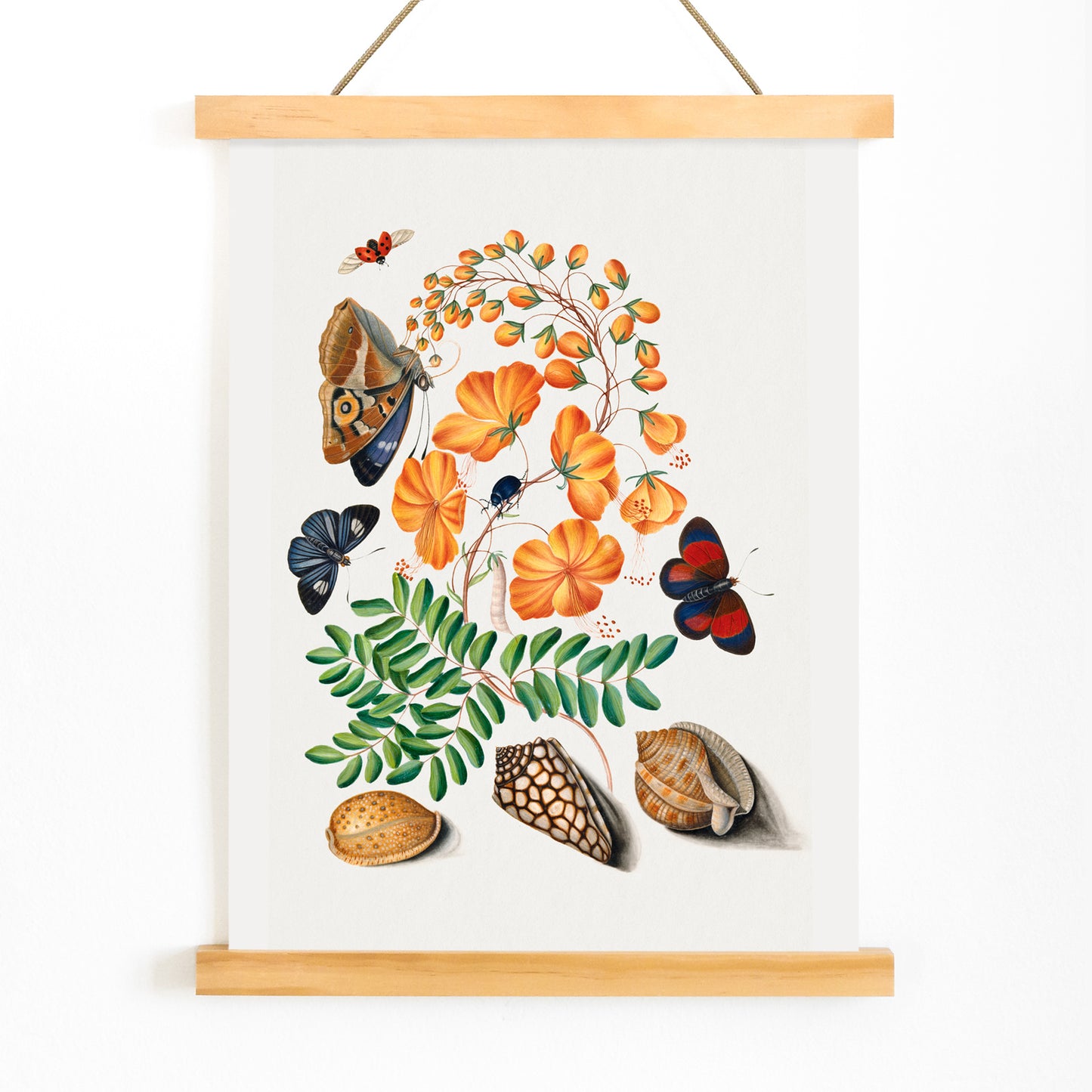
This 1768 plate was created during a period when naturalists sought to document and share the diversity of the natural world. Such illustrations were essential for study and identification, especially before photography. They allowed rare or fragile specimens—like butterflies, beetles, and shells—to be examined and appreciated far from their original habitats. Bolton’s work reflects the Enlightenment ideal of cataloging nature for both scientific advancement and personal wonder.
Intended for libraries, studies, and collectors’ cabinets, this print bridges the gap between scientific record and decorative art, embodying the era’s fascination with discovery and order.
Style & Characteristics
The composition features a butterfly, several beetles, and assorted shells, each carefully spaced on a pale cream background. Fine ink outlines define the forms, while transparent watercolor washes add subtle color and depth. Warm ochre and orange tones highlight the insects, complemented by touches of green and blue on the shells, creating a harmonious and balanced arrangement.
The overall mood is precise yet gentle, with an airy clarity typical of 18th-century natural history illustration. This vintage print’s delicate detailing and restrained palette make it both scientifically informative and visually appealing.
In Interior Design
This print brings a refined natural history accent to libraries, studies, bedrooms, or hallways. It pairs beautifully with wood, linen, and brass finishes, and suits both classic and contemporary interiors seeking a touch of curiosity and calm.
For a cohesive display, combine it with botanical prints or animal artwork to create a gallery wall inspired by vintage scientific collections.