


You may also like
-
Huile Lesieur Poster
Leonetto Cappiello · 1930 · Spirited chef advertising poster pouring golden oil with bold red type on black background
Poster from £9 · Framed from £16
Regular price From £6.00Regular price -
Cacao Suchard Poster
Leonetto Cappiello · 1911 · Vintage poster as a cocoa art print with a striking Suchard tin
Poster from £9 · Framed from £16
Regular price From £6.00Regular price -
The Vegetabull Poster
Lewitt-Him · 1933 · Whimsical vegetable bull poster with bold, playful shapes and cheerful market-day energy
Poster from £9 · Framed from £16
Regular price From £6.00Regular price -
Rita Gaufres Poster
Leon Dupin · 1933 · Playful waffle poster featuring a smiling chef and warm golden tones
Poster from £9 · Framed from £16
Regular price From £6.00Regular price


-

"Very nice Posters. The quality is amazing and we received it very quickly !"
-

"A shop to visit absolutely. Huge selection of posters. We spent more than an hour there !"
-

"Perfect to find gift. Price are very good. An they can frame and pack it on site"


About the Artist
Donald Brun was a Swiss graphic designer and poster artist whose work during the mid-20th century helped shape the distinctive visual language of Swiss commercial art. Known for his refined airbrush technique and subtle humor, Brun transformed everyday products into memorable icons, earning lasting recognition among collectors and design enthusiasts.
His posters are emblematic of the Swiss advertising boom, a period when clarity, charm, and visual wit were highly valued. Brun’s playful yet precise style continues to inspire those interested in the history of famous artists in graphic design and the evolution of modern poster art.
The Artwork
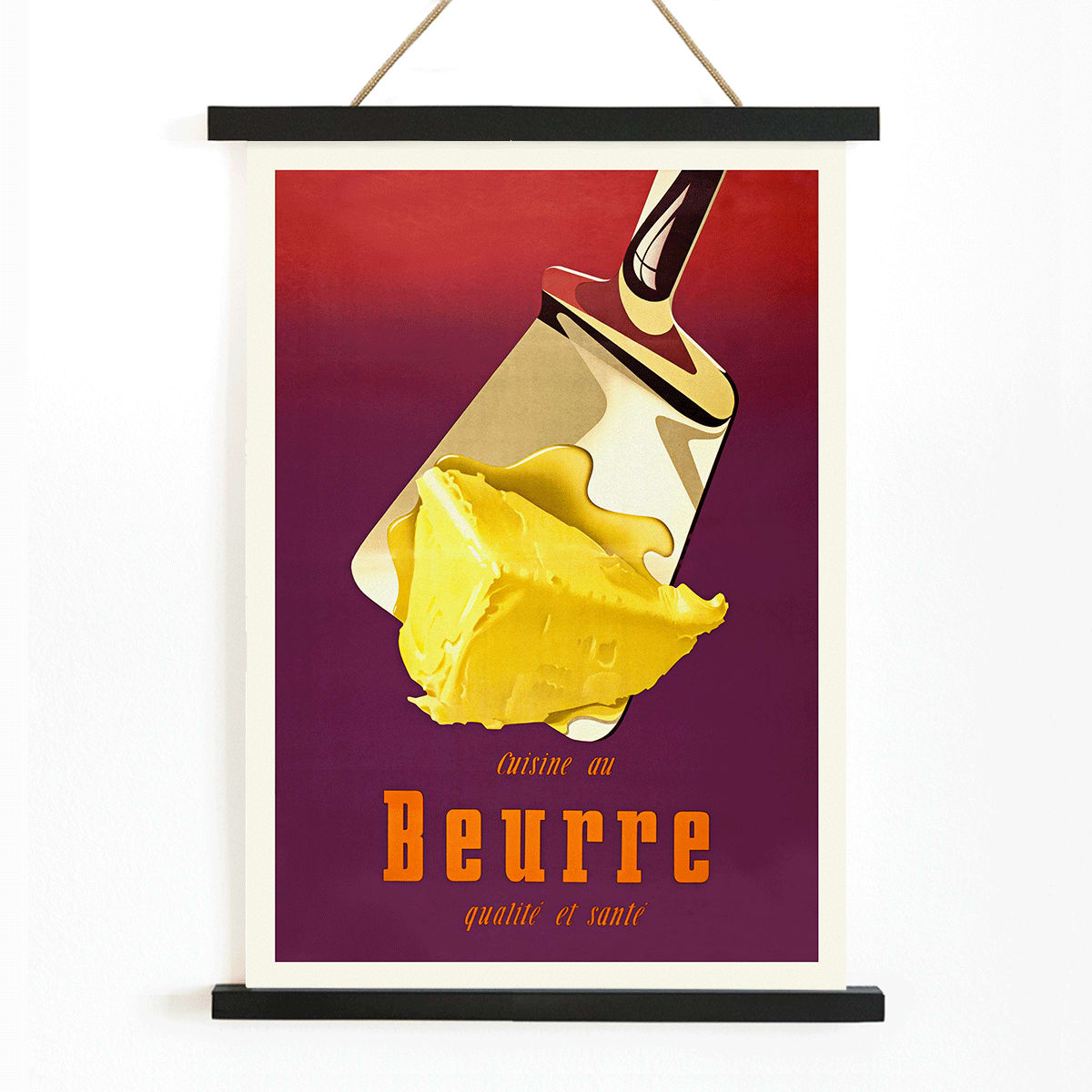
Created in 1951, this Butter poster reflects the optimism and renewed focus on daily comforts that characterized postwar Europe. At a time when brands sought to restore a sense of normalcy and pleasure, Brun’s design offered a reassuring vision of abundance and domestic warmth. The poster was intended as an advertisement, using simplicity and approachability to connect with viewers on a personal level.
It stands as a testament to the era’s belief in the power of visual communication, and fits seamlessly among other vintage advertising posters that celebrate the artistry of persuasion in everyday life.
Style & Characteristics
The artwork centers on a large, stylized block of butter, rendered with smooth, airbrushed gradients that create a soft, tactile effect. The background features bold, high-contrast red and orange fields, making the butter motif pop with cheerful energy. Subtle highlights and gentle shading give the subject a sense of volume and freshness.
The palette is dominated by warm yellows and oranges, complemented by a vivid red and a hint of cool blue in the butter’s shadow. The overall mood is bright, inviting, and lightly whimsical, embodying the spirit of mid-century Swiss poster design. Those drawn to yellow-toned prints will appreciate its sunny disposition.
In Interior Design
This poster is particularly well-suited for kitchens, breakfast nooks, and dining spaces, where its culinary theme and vibrant colors create a welcoming atmosphere. It also adds a playful touch to cafés, studios, or pantry areas, serving as a conversation piece without overwhelming the decor.
Pair it with light wood, stainless steel, or white tile for a modern-retro look, or with colorful ceramics for a more eclectic style. Its warm hues complement beige, cream, tomato red, and mustard accents, and it integrates beautifully into a food-themed kitchen wall art display.