


You may also like
-

Brazil 2 Poster
Waldomiro Goncalves Christino · 1970 · Vibrant Brazil travel poster with bold shapes and sunny coastal mood
Poster from £9 · Framed from £16
-

Visit Puerto Rico Poster
Unknown artist · 1950 · Mid-century Puerto Rico travel poster featuring a sailboat and historic coastal fort
Poster from £9 · Framed from £16
-

Sanremo Poster
Unknown artist · 1920 · Sunlit Sanremo travel poster with flowered foreground, palms, and a bright Mediterranean bay
Poster from £9 · Framed from £16
-

Fly to South Sea isles via Pan American Poster
Paul George Lawler · 1938 · Vibrant South Sea Isles travel poster with Pan Am seaplane and tropical shoreline
Poster from £9 · Framed from £16


-

"Very nice Posters. The quality is amazing and we received it very quickly !"
-

"A shop to visit absolutely. Huge selection of posters. We spent more than an hour there !"
-

"Perfect to find gift. Price are very good. An they can frame and pack it on site"


About the Artist
Waldomiro Goncalves Christino is credited as the designer of Brazil 1, created in 1984 during a period when Brazilian tourism sought to project a vibrant national identity through graphic art. Christino's work reflects the late 20th-century emphasis on professional poster design, where visual impact and recognizable symbols were central to promoting destinations.
His contributions align with a broader movement in South American advertising, where posters served as both cultural ambassadors and practical tools for attracting international visitors. Today, Christino's designs are appreciated by collectors of advertising and landscape posters for their clarity and enduring sense of place.
The Artwork
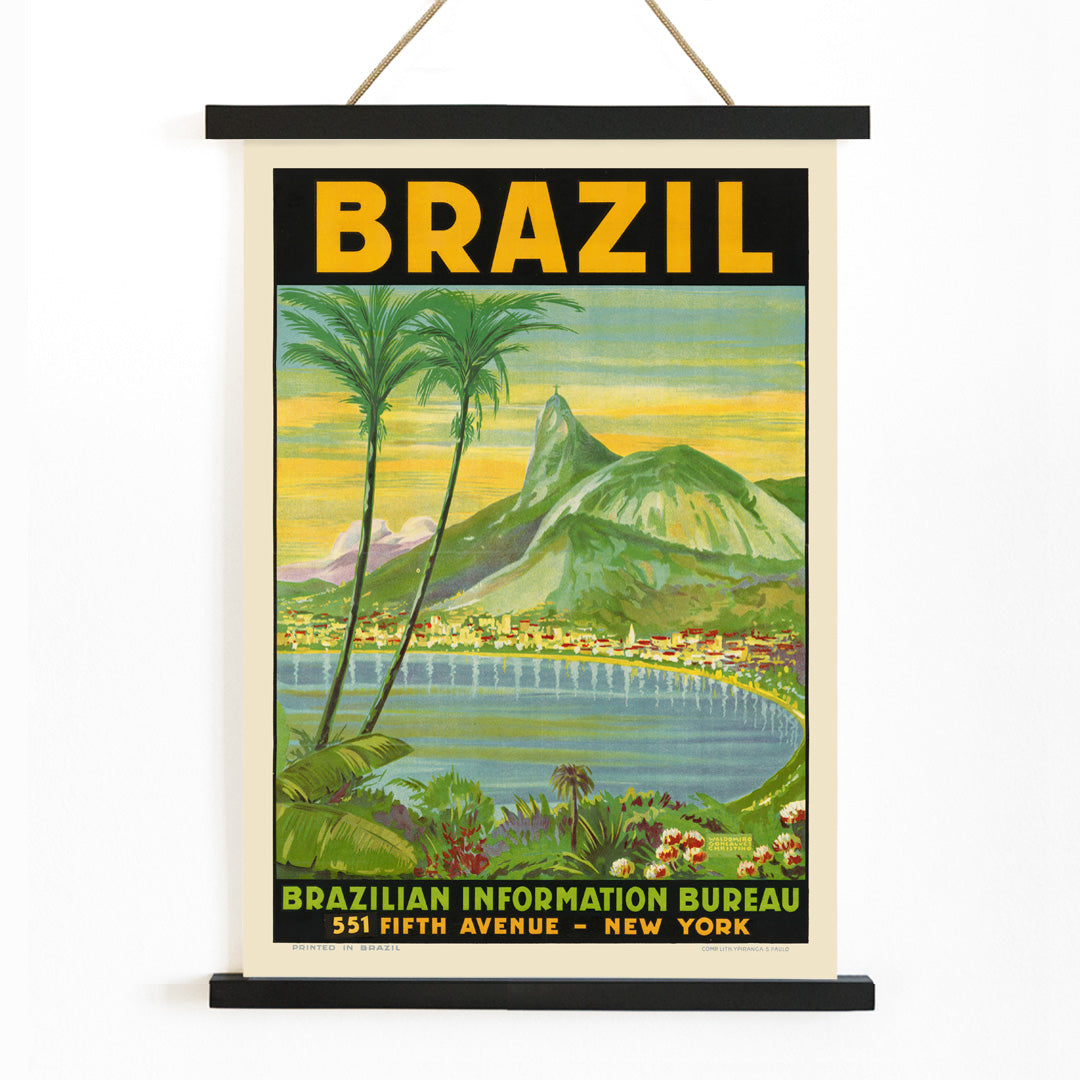
Brazil 1 was conceived as a celebration of Rio de Janeiro, focusing on Sugarloaf Mountain as an instantly identifiable icon. Created for tourism promotion, the poster was intended to evoke the allure of Brazil's natural beauty and cosmopolitan energy, inviting viewers to imagine themselves in the sun-drenched city.
This work draws on the legacy of mid-century travel campaigns, where posters were a primary means of communicating a destination's appeal across borders. As a vintage print, it stands as a testament to the era's optimism and the power of visual storytelling in shaping perceptions of place.
Style & Characteristics
The poster employs bold, simplified shapes and strong silhouettes, ensuring immediate recognition even from a distance. Its palette is dominated by sunny yellows, lush greens, and deep blues, with accents of red and purple that infuse the scene with a festive, energetic spirit.
Large blocks of color and crisp outlines reflect a printmaking approach rooted in modernist graphic design. The overall effect is bright, inviting, and panoramic, making it a striking example of late 20th-century travel poster art and a natural complement to other works in the landscape collection.
In Interior Design
This Brazilian travel poster serves as a bold focal point in living rooms, offices, or entryways, especially in spaces that benefit from a touch of color and a sense of escape. Its vibrant hues pair well with natural woods, neutral tones, or interiors that echo the artwork's greens and blues.
For a cohesive look, consider combining it with minimalist frames from the frames collection or displaying it alongside other vintage posters to create a gallery wall that celebrates global destinations and graphic design heritage.