


You may also like
-

Vishnou Poster
Jean-Jacques Chabrélie · 1840 · Serene Vishnu poster with mythic throne scene and harmonious decorative details
Poster from £9 · Framed from £16
-

Matsyavatara Poster
Jean-Jacques Chabrélie · 1840 · Mythic Matsyavatara poster with radiant blues and golden accents in a devotional composition
Poster from £9 · Framed from £16
-

Prince of magicians Poster
Springer and Welty Lith · 1910 · Glamorous stage magic poster featuring reclining enchantress, hookah, and tiger rug
Poster from £9 · Framed from £16
-

Shakyamuni Buddha Poster
Unknown artist · 535 · Narrative Buddhist art print with Shakyamuni Buddha centered among vivid devotional scenes
Poster from £9 · Framed from £16


-

"Very nice Posters. The quality is amazing and we received it very quickly !"
-

"A shop to visit absolutely. Huge selection of posters. We spent more than an hour there !"
-

"Perfect to find gift. Price are very good. An they can frame and pack it on site"


About the Artist
Jean-Jacques Chabrélie was an accomplished 19th-century French illustrator known for his contributions to educational and cultural publications. In the 1840s, as European interest in world religions and distant cultures grew, artists like Chabrélie played a key role in bringing global iconography to a wider audience through detailed printed plates. His work reflects the era’s fascination with documenting and interpreting traditions beyond Europe.
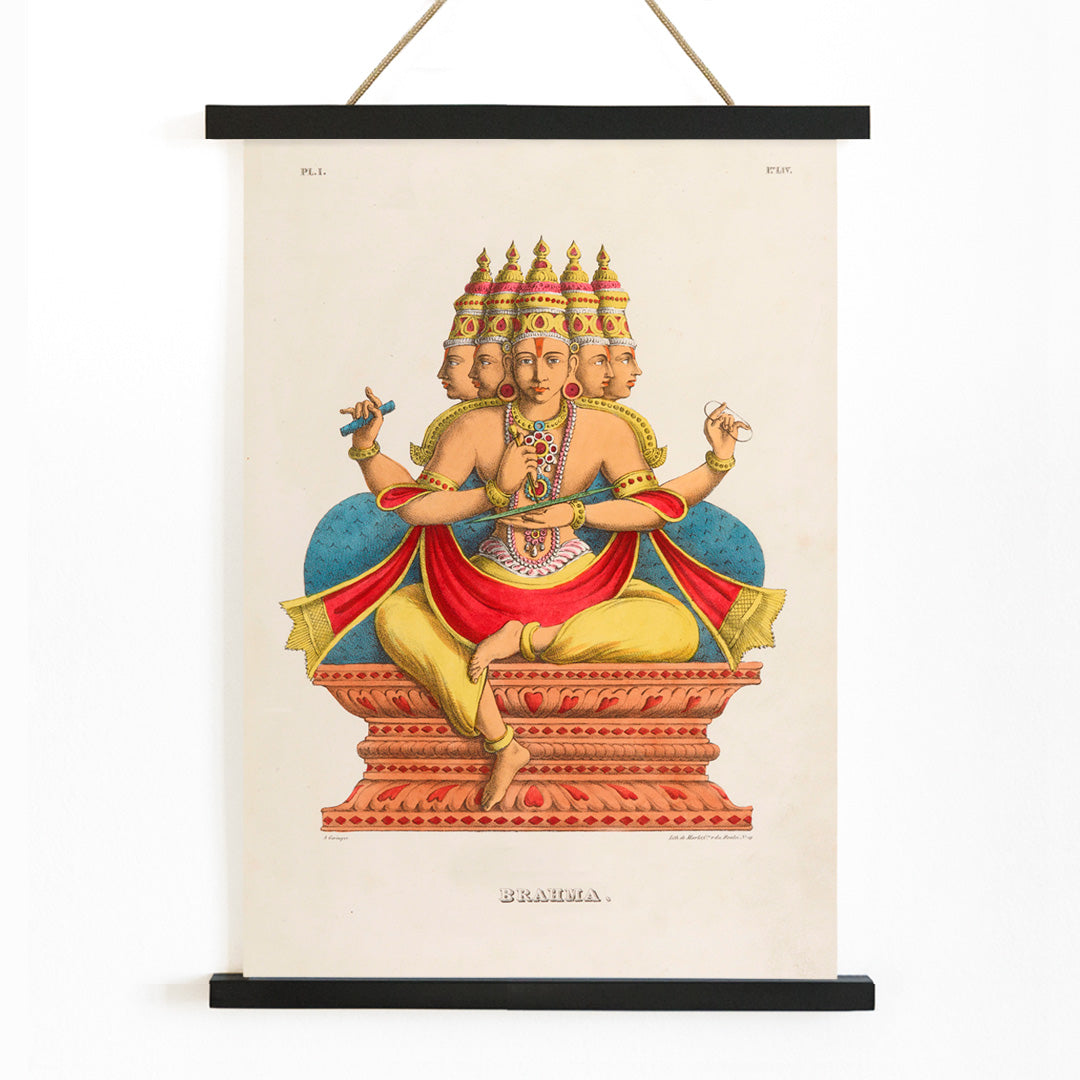
Chabrélie’s illustrations, such as this depiction of Brahma, are now appreciated as both historical documents and decorative art, fitting seamlessly into our classic art prints collection and resonating with those who value cross-cultural exploration.
The Artwork
This 1840 print introduces Brahma, the creator deity from Hindu mythology, to a European audience. At a time when travel literature and encyclopedic works sought to summarize the world’s religions, such images served as visual gateways to unfamiliar beliefs and traditions. The artwork was likely intended for educational use, offering a respectful yet accessible interpretation of sacred Hindu iconography for curious viewers of the period.
Its creation reflects the 19th-century drive to collect, categorize, and visually translate the spiritual heritage of other cultures, a practice that shaped the era’s understanding of global diversity. The print’s presence in collections today invites reflection on both its historical context and its enduring visual power. For more works exploring spiritual and mystical themes, see our esoteric posters and oriental wall art.
Style & Characteristics
The print is rendered in a precise, illustrative style typical of 19th-century educational plates. Brahma is depicted seated on a lotus, with four faces and multiple arms, each holding symbolic objects. The composition is symmetrical and orderly, emphasizing clarity and didactic purpose. The palette features warm beige and cream tones as a base, with accents of red, blue, and yellow highlighting key elements of the figure and attire.
The mood is serene and contemplative, with decorative details that convey the sacred nature of the subject. Fine linework and careful color application lend the image both visual richness and scholarly restraint, making it suitable for close study or elegant display.
In Interior Design
This vintage print brings a sense of cultural depth and historical curiosity to interiors. It works beautifully in studies, meditation spaces, or living rooms where thoughtful art is appreciated. The warm neutral background pairs well with natural materials like linen or wood, while the brighter accents can be echoed in textiles or ceramics.
For a curated gallery wall, combine this piece with other spiritual or global artworks from our esoteric posters and frame selections from frames. Its refined presence suits both eclectic and modern interiors seeking a meaningful focal point.