


You may also like
-

Boys in a Dory Poster
Winslow Homer · 1880 · Serene seaside art print of boys sharing a dory on open water
Poster from £9 · Framed from £16
-

Summertime Poster
Winslow Homer · 1880 · Sunlit seaside art print of children at play along the gentle shore
Poster from £9 · Framed from £16
-

The Flirt Poster
Winslow Homer · 1874 · Breezy sailboat scene poster capturing seaside flirtation and 19th-century leisure
Poster from £9 · Framed from £16
-

Fishing Boats Poster
Winslow Homer · 1903 · Sunlit fishing boats art print with turquoise water and crisp white sails
Poster from £9 · Framed from £16


-

"Very nice Posters. The quality is amazing and we received it very quickly !"
-

"A shop to visit absolutely. Huge selection of posters. We spent more than an hour there !"
-

"Perfect to find gift. Price are very good. An they can frame and pack it on site"


About the Artist
Winslow Homer was one of the defining American artists of the nineteenth century, celebrated for his evocative depictions of everyday life and the rugged beauty of the sea. After establishing his reputation as an illustrator during the Civil War, Homer shifted his focus to painting and watercolor, developing a style rooted in direct observation and realism.
His works, especially those inspired by New England’s coastal communities, have shaped the visual language of American identity, highlighting themes of labor, weather, and the interplay between people and nature. Homer's legacy endures among famous artists and within the world of classic art prints.
The Artwork
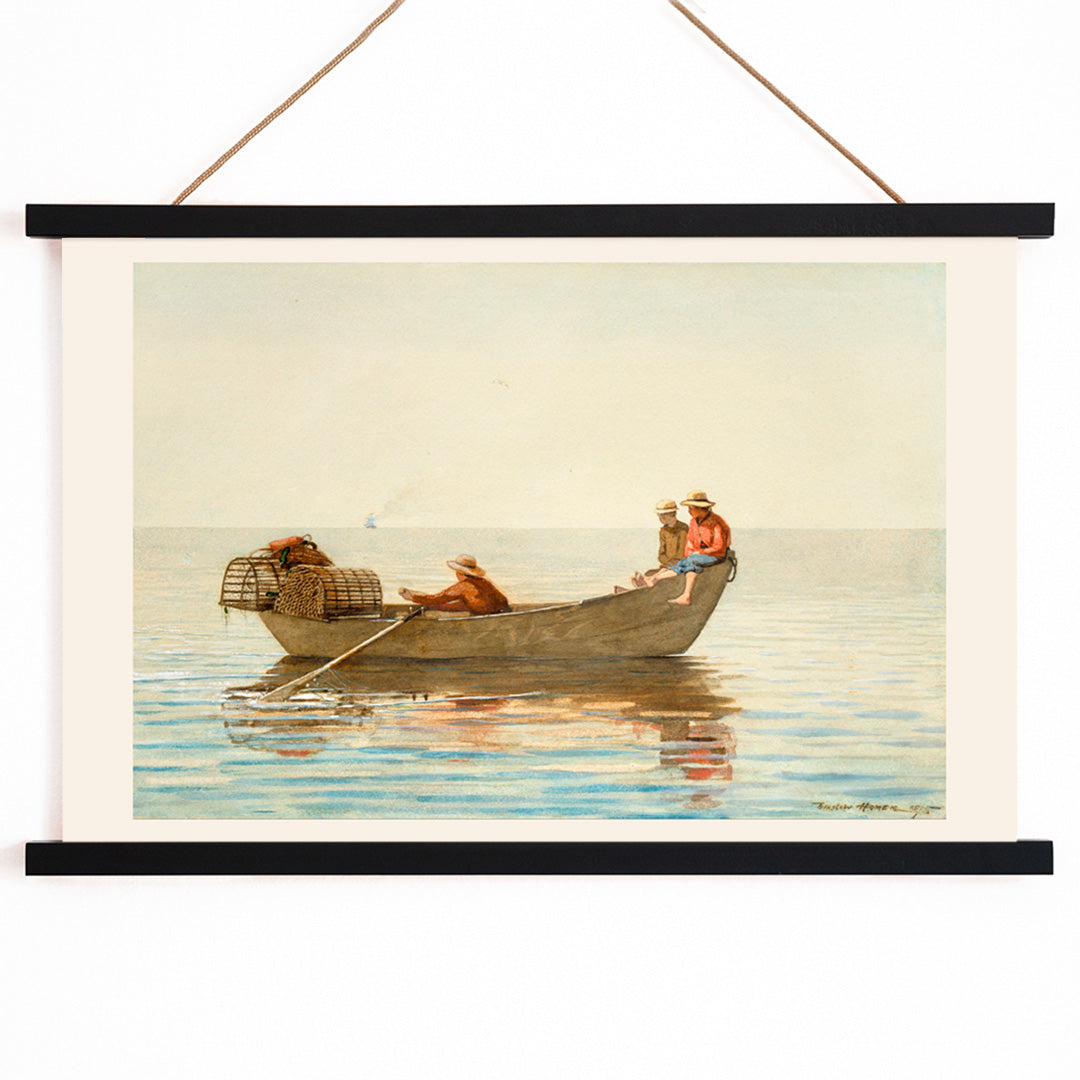
Three Boys in a Dory with Lobster Pots, created in 1872, captures a quiet moment in the daily life of a Massachusetts fishing village. At a time when Homer was immersing himself in the rhythms of maritime communities, he chose to depict not dramatic action but the subtle realities of youth learning the trade of the sea.
The artwork reflects the values of apprenticeship, community, and the passage from childhood to responsibility. The presence of lobster pots and the modest dory root the scene in the economic and social fabric of the coast, offering a window into the traditions that shaped generations of New Englanders.
Style & Characteristics
The painting centers on a small wooden dory with three boys and several lobster pots, set against a tranquil expanse of blue water. Homer's technique is marked by precise drawing and a naturalistic approach, giving the boat and its contents a tangible sense of weight and presence.
Cool blues dominate the seascape, complemented by the warm, earthy browns of the boat and fishing gear. Subtle highlights bring life to the figures, while the overall atmosphere remains calm and sunlit. The composition’s quiet purposefulness and clarity make it a timeless example of coastal American art.
In Interior Design
This maritime scene brings a sense of openness and calm to living rooms, studies, or hallways, especially in spaces seeking a touch of coastal charm. Its grounded realism works well with transitional, classic, or modern interiors, adding narrative depth and warmth.
Pair with white or sandy walls, natural wood accents, and navy textiles to echo the artwork’s palette. For a harmonious gallery wall, combine with other sea and ocean pieces or blue toned prints.