


You may also like
-
Corypha Cerifera Arruda Poster
Carl Friedrich Philipp von Martius · 1823 · Detailed palm botanical print with fan leaves and precise scientific inset studies
Poster from £9 · Framed from £16
Regular price From £6.00Regular price -
Astrocaryum Vulgare Poster
Carl Friedrich Philipp von Martius · 1823 · Detailed palm botanical print with specimen studies on warm beige paper
Poster from £9 · Framed from £16
Regular price From £6.00Regular price -
Attalea Compta 2 Poster
Carl Friedrich Philipp von Martius · 1823 · Detailed palm botanical print with scientific studies on warm beige paper
Poster from £9 · Framed from £16
Regular price From £6.00Regular price -
Attalea Compta Poster
Carl Friedrich Philipp von Martius · 1823 · Detailed botanical print of Attalea palm with coastal scene and botanical studies
Poster from £9 · Framed from £16
Regular price From £6.00Regular price


-

"Very nice Posters. The quality is amazing and we received it very quickly !"
-

"A shop to visit absolutely. Huge selection of posters. We spent more than an hour there !"
-

"Perfect to find gift. Price are very good. An they can frame and pack it on site"


About the Artist
Carl Friedrich Philipp von Martius was a German botanist whose pioneering expeditions and publications helped shape nineteenth-century botanical science. Renowned for his extensive research on tropical flora, especially palms, Martius collaborated with artists and scientists to document plant species in meticulous detail. His illustrated works became essential references for botanists, collectors, and naturalists throughout Europe and beyond.
Martius’s legacy endures in the world of botanical illustration, where his prints are valued for both their scientific rigor and their aesthetic appeal. His work is often displayed alongside other famous artists who bridged the gap between scientific inquiry and visual artistry.
The Artwork
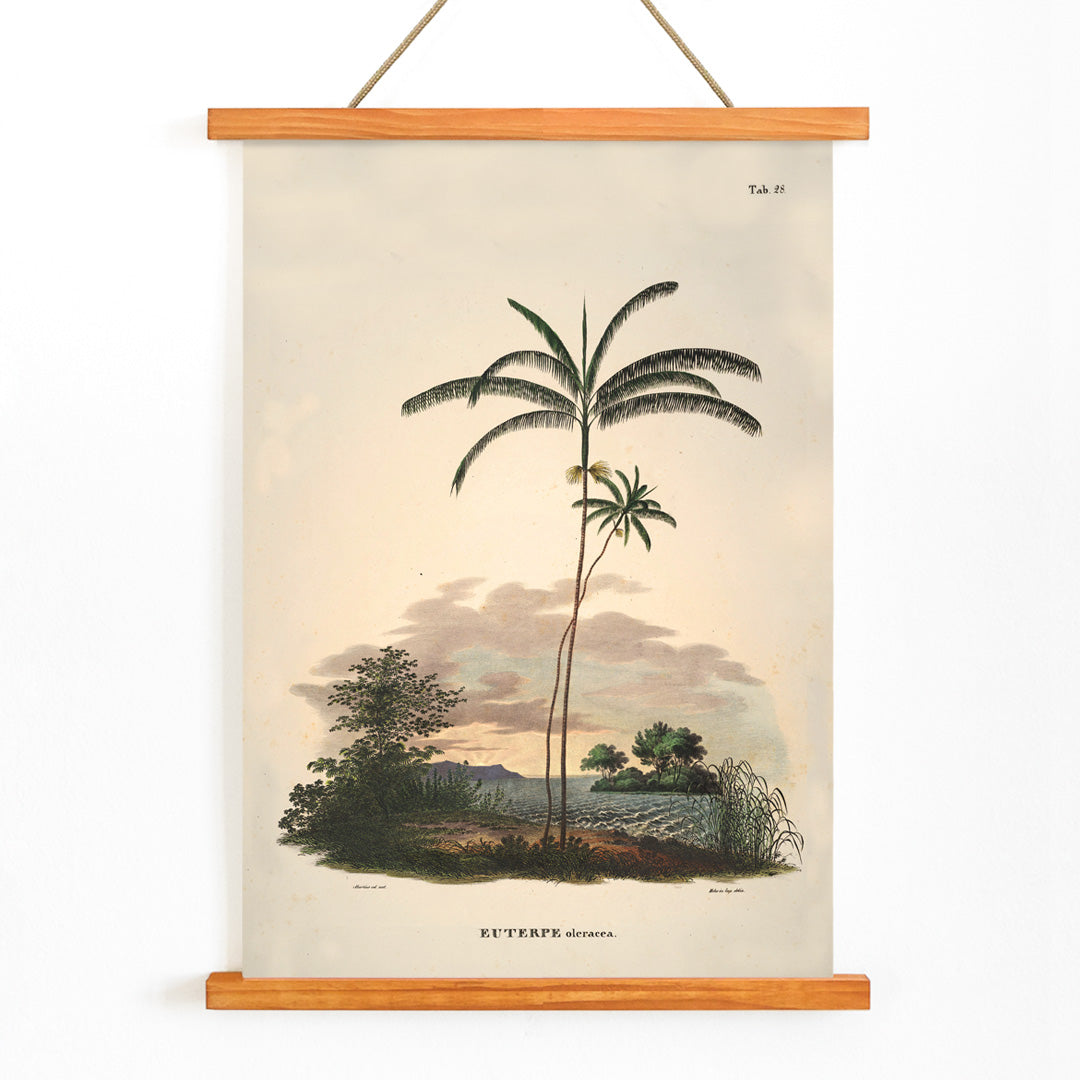
This depiction of Euterpe oleracea, commonly known as the açaí palm, was created during a period when European botanists sought to systematically catalog the rich biodiversity of the Amazon. The açaí palm, now celebrated for its fruit, was of particular interest due to its ecological and economic significance in riverine communities.
Martius’s illustration was produced as part of a comprehensive effort to document and classify plant species for scientific study and publication. Such works were vital tools for education and research in an era before photography, allowing knowledge to be shared across continents and generations.
Style & Characteristics
The print presents a vertically oriented study of the açaí palm, with the main trunk and feathery fronds rendered in fine, precise linework. Surrounding the central figure, smaller analytical inserts highlight key botanical features such as fruit clusters and structural details, supporting accurate identification.
The palette features soft greens for the foliage, warm browns for botanical elements, and a gentle beige background, creating a calm and archival atmosphere. This classic natural history style appeals to collectors of botanical prints and those drawn to vintage palm imagery.
In Interior Design
This botanical print lends a sense of order and tranquility to interiors such as home offices, libraries, hallways, or bedrooms. Its scientific composition pairs well with natural materials like wood, rattan, and linen, as well as minimalist or vintage-inspired decor.
To echo its palette, consider incorporating sage or olive textiles and sandy neutrals. For a harmonious display, explore the green collection or curate a gallery wall with other natural history themes.