


You may also like
-

Before going to bed Poster
Michael Heumuller · 1950 · Intimate black-and-white bedroom poster with poised figure and cinematic evening shadows
Poster from £9 · Framed from £16
-

Rebecca Salsbury Strand Poster
Alfred Stieglitz · 1922 · Intimate black and white portrait art print with quiet modernist intensity
Poster from £9 · Framed from £16
-

Georgia O'Keeffe - Torso Poster
Alfred Stieglitz · 1918 · Cropped black and white torso art print shaped by soft light and modernist intimacy
Poster from £9 · Framed from £16
-

Georgia O'Keeffe - Hips Poster
Alfred Stieglitz · 1918 · Intimate modernist nude print with sculptural cropping and velvety black-and-white tones
Poster from £9 · Framed from £16


-

"Very nice Posters. The quality is amazing and we received it very quickly !"
-

"A shop to visit absolutely. Huge selection of posters. We spent more than an hour there !"
-

"Perfect to find gift. Price are very good. An they can frame and pack it on site"


About the Artist
Olive Cotton was an influential Australian modernist photographer, celebrated for her innovative approach to light and form during the interwar period. Working primarily in Sydney, Cotton was part of a creative circle that helped shape the direction of Australian photography. Her work is noted for its sensitivity and quiet strength, often transforming everyday moments into evocative visual narratives.
Cotton’s photographs have become emblematic of a distinctly Australian perspective, blending personal vision with broader cultural themes. Her legacy endures in collections of photography prints, where her refined style continues to inspire admirers of modernist art.
The Artwork
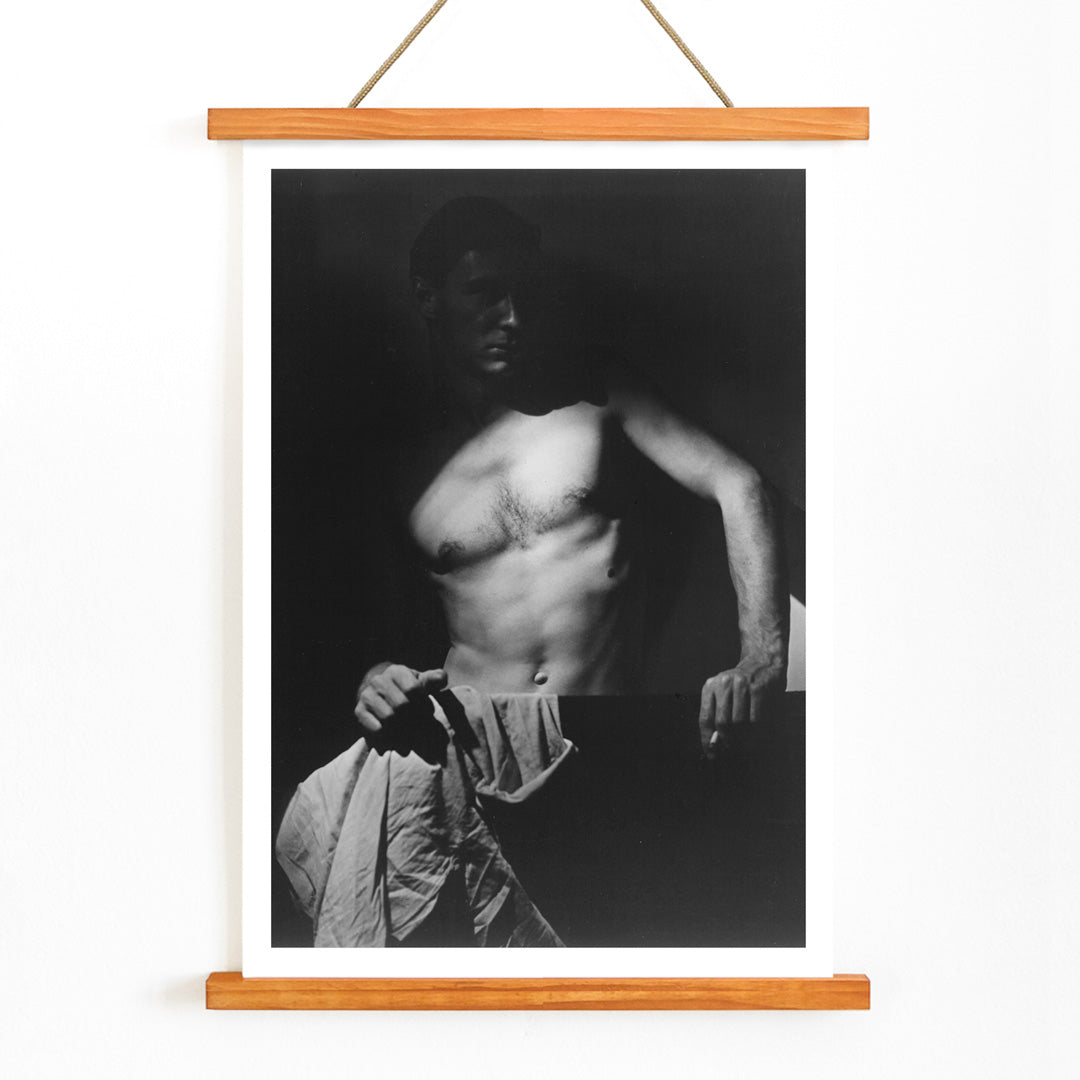
Created in 1939, Max After Surfing captures a pivotal era when Australian beach culture was emerging as a symbol of national identity and vitality. Rather than focusing on the action of surfing, Cotton turns her lens to the contemplative aftermath—a quiet, reflective moment that reveals the human side of coastal life.
This photograph was taken within Cotton’s own creative community, reflecting the collaborative spirit of the time. As a work of 1930s Australian modernism, it bridges intimate portraiture with the evolving story of beach culture, a subject that remains central to surf wall art today.
Style & Characteristics
The photograph is rendered in striking black and white, with high contrast that accentuates the sculptural quality of the subject’s torso. Dramatic lighting creates bold highlights and deep shadows, emphasizing the textures of skin and the glistening effect of saltwater.
Cotton’s composition is minimalist, focusing attention on form and surface while evoking a sense of calm and introspection. This timeless black-and-white image pairs effortlessly with other black and white posters, making it a versatile choice for a range of interiors.
In Interior Design
This art print lends a serene, contemplative presence to bedrooms, hallways, or contemporary living spaces. Its monochrome palette complements both crisp modern decor and natural materials like wood or linen, adapting easily to coastal or urban settings.
Framed simply in black or light wood, the piece enhances minimalist, mid-century, or modern interiors, appealing to collectors who appreciate vintage photography and understated figurative art.