


You may also like
-

Bananas Poster
Ellen Isham Schutt · 1904 · Sunlit bananas botanical print with gentle shading and a clean, airy background
Poster from £9 · Framed from £16
-

Pineapple Poster
Pierre-Joseph Redouté · 1805 · Refined pineapple print with crisp botanical detail and soft green-yellow tones
Poster from £9 · Framed from £16
-

Citrus Limonium Poster
Charles Dessalines D Orbigny · 1849 · Detailed lemon botanical print with fruit, blossoms, and glossy leaves on cream
Poster from £9 · Framed from £16
-

Indian Tamarind Poster
Amanda Almira Newton · 1908 · Delicate tamarind botanical print featuring airy leaves and warm brown pods on cream
Poster from £9 · Framed from £16


-

"Very nice Posters. The quality is amazing and we received it very quickly !"
-

"A shop to visit absolutely. Huge selection of posters. We spent more than an hour there !"
-

"Perfect to find gift. Price are very good. An they can frame and pack it on site"


About the Artist
Paul Gervais was a French zoologist and paleontologist active during the mid-1800s, renowned for his contributions to scientific illustration and education in Paris. His work bridged the gap between museum research and public understanding, making natural history accessible through detailed visual documentation. Gervais’s illustrated plates were part of a broader movement in 19th-century Europe to catalog and share knowledge about the natural world, reflecting the era’s fascination with discovery and classification.
His illustrations, such as this bird plate, were instrumental in bringing exotic species to the attention of scholars and the wider public. Today, these works are appreciated not only for their scientific value but also for their decorative appeal, fitting seamlessly with other science wall art and classic naturalist collections.
The Artwork
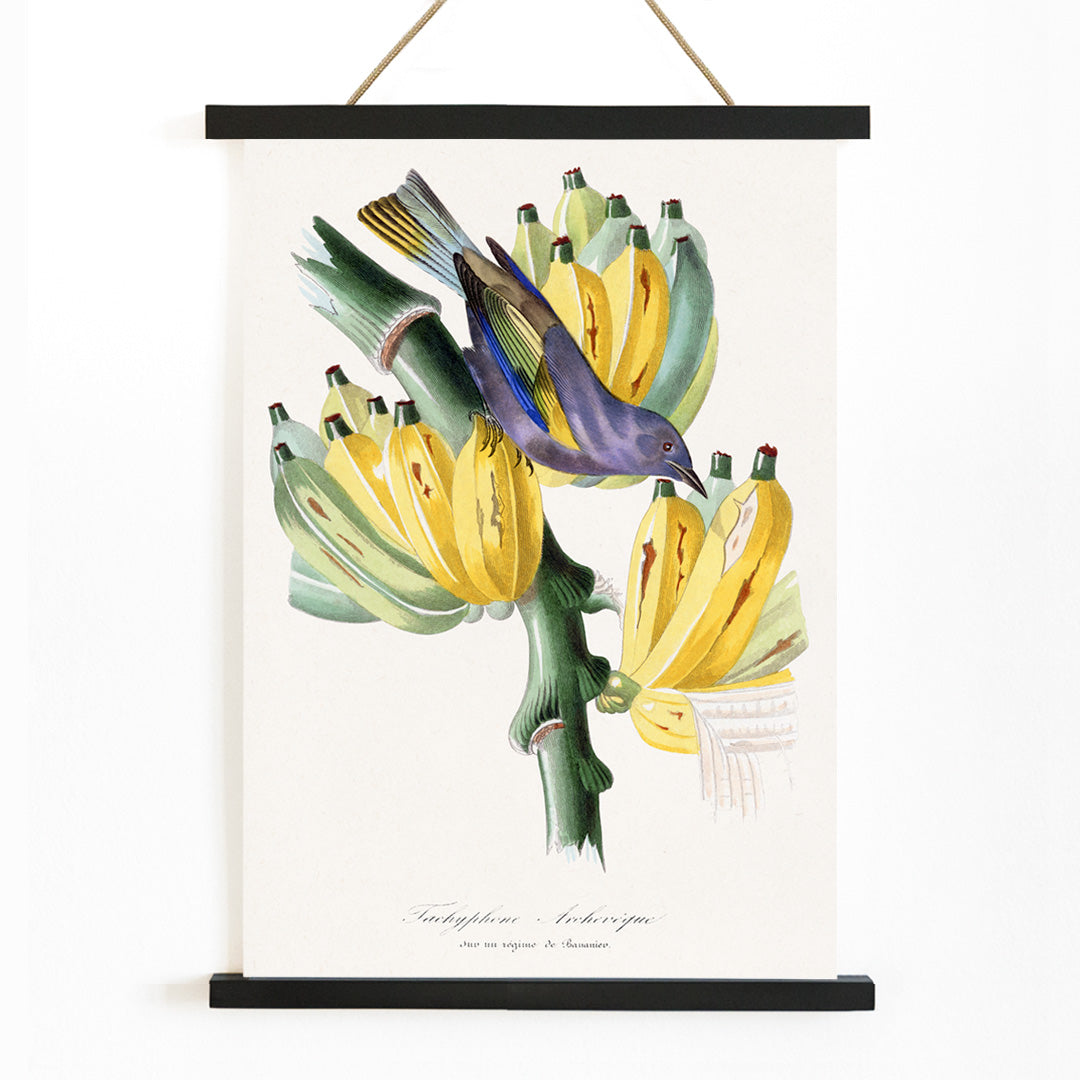
Created in 1842, this natural history print was designed as an educational tool, allowing viewers to study the Tachyphone archeveque without leaving home. Such plates were essential for reference and study in an age when travel was limited and access to distant species was rare. The print reflects the intellectual climate of institutions like the Jardin des Plantes, where images played a vital role in organizing and disseminating scientific knowledge.
Beyond its educational purpose, the artwork evokes the spirit of 19th-century exploration and the desire to document the world’s biodiversity. It stands as a testament to the era’s commitment to taxonomy and public instruction, while also capturing the romance of discovery.
Style & Characteristics
The composition centers the bird perched gracefully among large, arching banana leaves that frame the subject with elegance and clarity. The artist employs precise linework and subtle shading to render both feathers and foliage, characteristic of scholarly plates intended for both study and admiration.
The color palette is fresh and botanical, dominated by lush greens and yellow accents in the leaves, with the bird displaying blue and brown tones. The overall mood is tranquil and focused, making this print a refined choice for those who appreciate botanical prints and vintage natural history art.
In Interior Design
This bird print brings a serene focal point to living rooms, studies, bedrooms, or hallways, complementing modern, Scandinavian, or classic interiors. Its natural hues pair well with light woods, rattan, and crisp white walls, while the greens and yellows can be echoed in plants or textiles.
It also integrates beautifully into a gallery wall alongside other animal art, contributing to a curated and timeless interior atmosphere.