


You may also like
-
Au Lido Poster
George Barbier · 1920 · Elegant Art Deco poster with elongated figures, parasols, and tranquil blue seaside
Poster from £9 · Framed from £16
Regular price From £6.00Regular price -
On the beach at Grado Poster
Eduard Otto Braunthal · 1910 · Sunlit Grado beach poster with relaxed bathers, crisp seaside blues and warm reds
Poster from £9 · Framed from £16
Regular price From £6.00Regular price -
La passagère du 54 Poster
Henri de Toulouse-Lautrec · 1895 · Vintage poster showing a passenger in a yellow deck chair above blue water
Poster from £9 · Framed from £16
Regular price From £6.00Regular price -
Barges on the beach Poster
Willem Anthonie van Deventer · 1870 · Quiet coastal art print with beached barges and muted beige grey blue tones
Poster from £9 · Framed from £16
Regular price From £6.00Regular price


-

"Very nice Posters. The quality is amazing and we received it very quickly !"
-

"A shop to visit absolutely. Huge selection of posters. We spent more than an hour there !"
-

"Perfect to find gift. Price are very good. An they can frame and pack it on site"


About the Artist
Henri Lebasque (1865–1937) was a French painter renowned for his luminous depictions of everyday life, from tranquil interiors to vibrant seaside scenes. Associated with Post-Impressionism and the Nabi movement, Lebasque developed a style that emphasized the emotional resonance of color and light over precise realism.
By the late 1920s, Lebasque was celebrated as a master of color, capturing the leisurely spirit of French society between the wars. His works remain sought after by admirers of classic art, offering a harmonious blend of Impressionist vitality and modern French refinement.
The Artwork
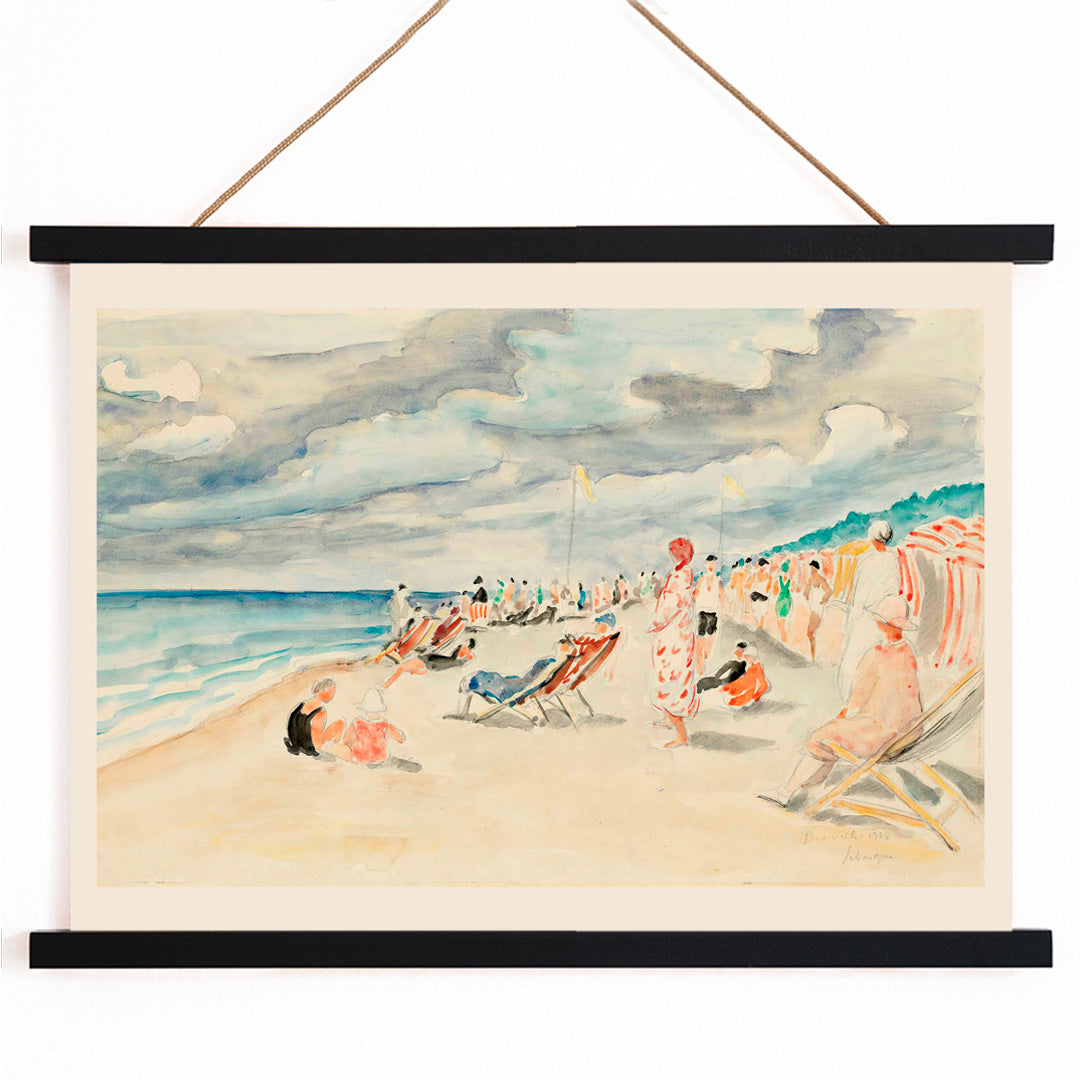
La plage de Deauville was created in 1928, during a period when Deauville had become a fashionable retreat for urbanites seeking relaxation by the sea. The artwork reflects the era's fascination with leisure, travel, and the social rituals of beachgoing that defined the French Riviera and Normandy coasts in the early twentieth century.
This scene is more than a simple beach view; it encapsulates a cultural moment when seaside holidays symbolized freedom and modernity. The composition invites viewers into the collective experience of summer recreation, making it a resonant piece for those drawn to the history of sea and ocean destinations.
Style & Characteristics
The painting features a lively arrangement of figures, parasols, and sailboats set against a luminous shoreline. Lebasque employs fluid contours and simplified forms, suggesting movement and interaction without strict detail. The palette is dominated by cool blues and whites for the sea and sky, contrasted with sandy beige and vibrant touches of red and yellow that enliven the scene.
The overall effect is airy and uplifting, with a sense of gentle motion and conviviality. The artwork’s relaxed atmosphere and sunlit clarity make it an appealing choice for those seeking a coastal art print that conveys both elegance and nostalgia.
In Interior Design
This art print brings a refreshing sense of light and openness to living rooms, bedrooms, or hallways. Its coastal palette complements Scandinavian, modern, and mid-century interiors, while its historical charm softens contemporary spaces.
To enhance the effect, pair with navy or sky-blue textiles, natural linen, and subtle red accents. It also integrates beautifully into a gallery wall of blue-themed posters, especially when framed with a minimalist selection from frames.