


You may also like
-

Bauhaus Poster 1 Poster
MORYARTY · 1923 · Geometric Bauhaus poster with layered shapes and bold modernist color contrasts
Poster from £9 · Framed from £16
-

Bauhaus Poster 17 Poster
MORYARTY · Geometric Bauhaus poster featuring intersecting circles and primary color accents on warm beige
Poster from £9 · Framed from £16
-

Bauhaus Poster 3 Poster
MORYARTY · 1923 · Geometric Bauhaus poster with primary colors and crisp modernist balance
Poster from £9 · Framed from £16
-

Bauhaus Poster 18 Poster
MORYARTY · 1926 · Geometric circles and bars poster in primary colors for crisp modernist walls
Poster from £9 · Framed from £16


-

"Very nice Posters. The quality is amazing and we received it very quickly !"
-

"A shop to visit absolutely. Huge selection of posters. We spent more than an hour there !"
-

"Perfect to find gift. Price are very good. An they can frame and pack it on site"


About the Artist
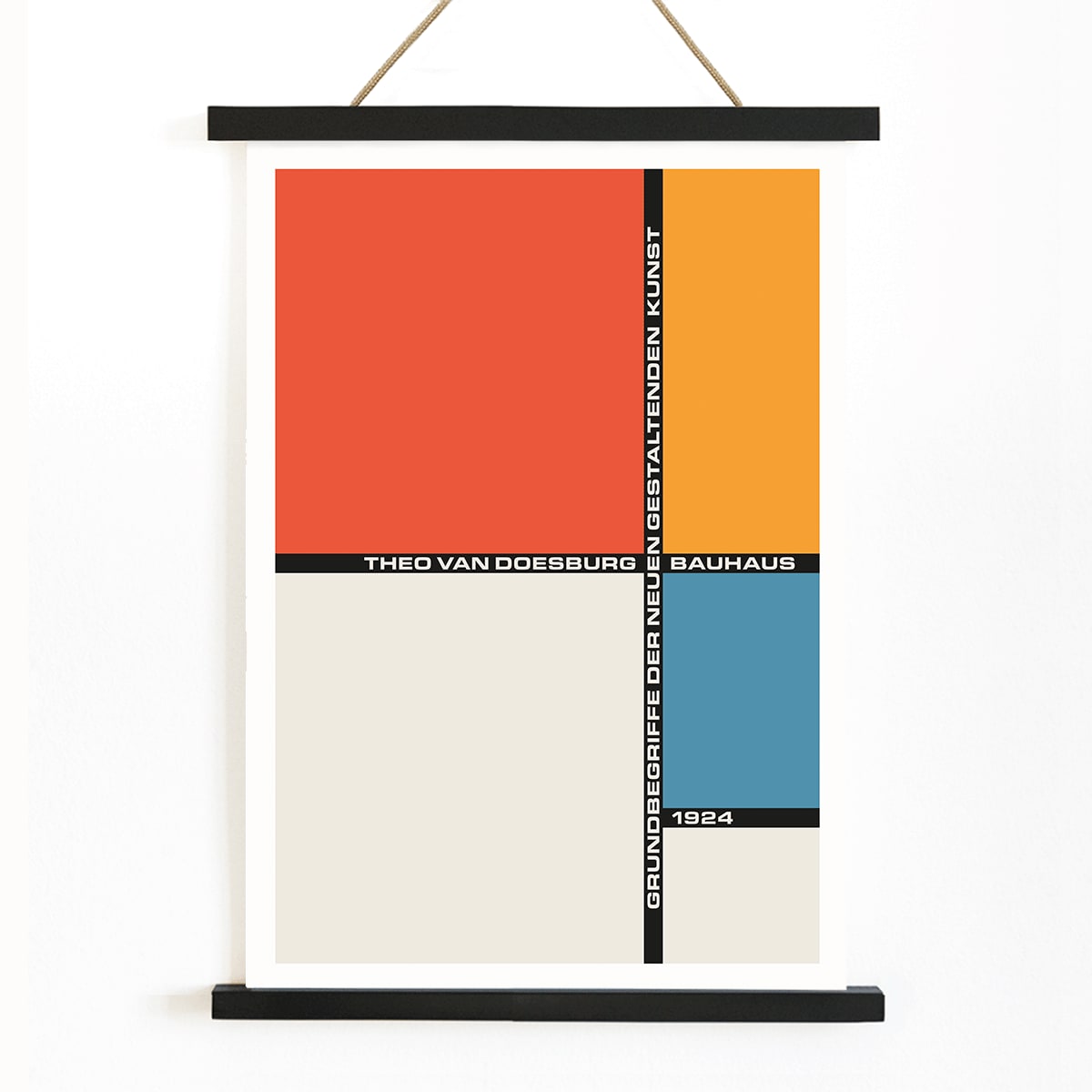
By an unknown artist, this 1924 design emerged from the dynamic environment of early twentieth-century European modernism. During this period, the Bauhaus and related movements were redefining the role of art and design in everyday life, emphasizing the integration of function and aesthetics. Posters like this were often created in collaborative workshop settings, reflecting shared ideals rather than individual authorship.
Anonymous works such as this one highlight the spirit of experimentation and collective creativity that characterized the Bauhaus ethos. They served as visual manifestos, promoting new ways of thinking about communication, education, and the built environment.
The Artwork
This piece, often referred to as Bauhaus 21, embodies the optimism and rationality of the interwar years, when designers aimed to shape a better future through clarity and order. In 1924, graphic design was increasingly seen as a tool for social progress, with posters intended to inform, inspire, and engage a broad public.
The artwork aligns with the principles of geometric abstraction championed by avant-garde circles of the time, seeking to create a universal visual language. As a Bauhaus poster, it reflects the movement’s ambition to bridge art, design, and modern life.
Style & Characteristics
The composition is defined by bold geometric forms: a prominent orange circle, a solid blue block, and crisp black lines arranged with precise balance. Rectangles and linear accents contribute to a sense of engineered order, typical of Bauhaus graphic design.
The color palette features orange, blue, red, black, and grey, creating striking contrast and visual rhythm. The overall effect is energetic yet disciplined, making it a compelling choice for admirers of Bauhaus posters and those drawn to abstract wall art with enduring appeal.
In Interior Design
This Bauhaus-inspired poster brings structure and vibrancy to contemporary interiors, whether displayed in a living room, office, or creative studio. Its geometric clarity complements modern, Scandinavian, and industrial spaces, anchoring a gallery wall or standing alone as a statement piece.
Pair it with neutral tones like charcoal, warm white, or concrete, and echo its orange and blue highlights through accessories or textiles. For a refined presentation, select a slim frame from our frames collection, allowing the artwork’s graphic energy to take center stage.