


You may also like
-

Lemons (Citrus Limon) Poster
Ellen Isham Schutt · 1908 · Luminous lemon botanical print with crisp fruit forms and fresh green foliage
Poster from £9 · Framed from £16
-

Cherry Crab Poster
Ellen Isham Schutt · 1905 · Delicate crab apple botanical print with ruby fruit and crisp leaves on white ground
Poster from £9 · Framed from £16
-

Bananas Poster
Ellen Isham Schutt · 1904 · Sunlit bananas botanical print with gentle shading and a clean, airy background
Poster from £9 · Framed from £16
-

Govenor Wood Poster
Ellen Isham Schutt · 1911 · Lifelike cherry botanical print with glossy red fruit and crisp green leaves
Poster from £9 · Framed from £16


-

"Very nice Posters. The quality is amazing and we received it very quickly !"
-

"A shop to visit absolutely. Huge selection of posters. We spent more than an hour there !"
-

"Perfect to find gift. Price are very good. An they can frame and pack it on site"


About the Artist
Ellen Isham Schutt was an American botanical illustrator active in the early twentieth century, known for her meticulous watercolor studies of fruits and plants. Working for the U.S. Department of Agriculture, she contributed to a vast archive of botanical illustrations that aided in the identification and classification of agricultural species. Schutt’s work is valued today for its blend of scientific precision and subtle artistry, reflecting the era’s dedication to botanical documentation.
The Artwork
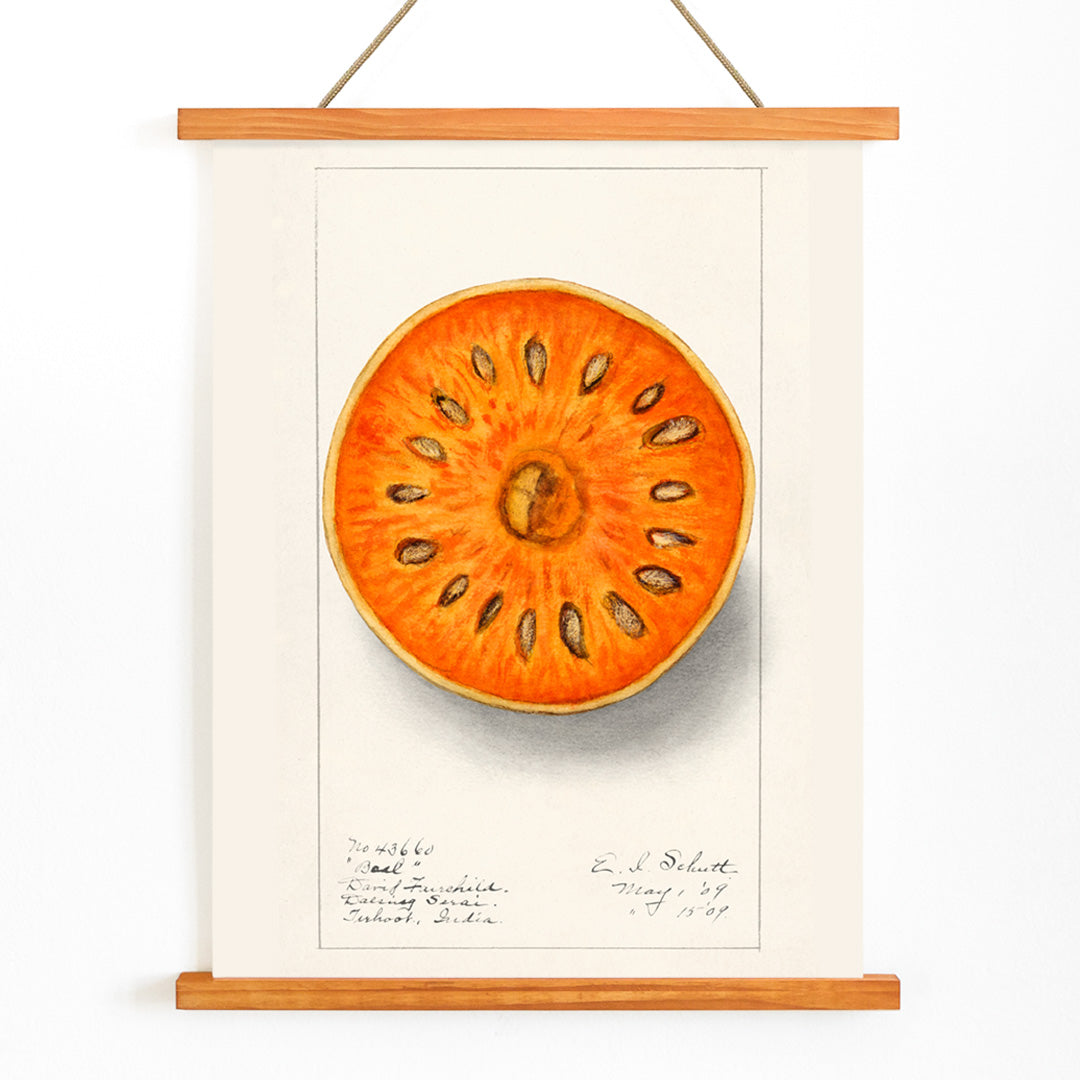
Painted in 1909, this study of Bael (Aegle marmelos) was created during a time when botanical illustration served as a vital tool for researchers, horticulturists, and agriculturalists. The bael fruit, native to South and Southeast Asia and prized for its culinary and medicinal uses, is depicted here as part of a broader effort to record and share knowledge of economically important plants. Schutt’s illustration would have contributed to the USDA’s mission of cataloging and disseminating information about global plant varieties, supporting both scientific inquiry and practical cultivation. This piece sits comfortably alongside other science illustration posters and classic botanical art prints from the period.
Style & Characteristics
The artwork features a carefully rendered bael branch with fruit and foliage, set against a pale, uncluttered background that highlights the subject. The fruits display warm tones of orange and yellow, while the leaves are painted in fresh, natural greens. Schutt’s technique combines delicate linework with transparent watercolor washes, capturing the texture and subtle color transitions of the plant. The overall effect is luminous and calm, emphasizing both botanical detail and a sense of tropical warmth.
In Interior Design
This vintage print brings a cultivated, sunlit accent to kitchens, dining areas, and breakfast nooks, where its fruit subject feels especially at home among ceramics, wood, and natural textiles. It also works beautifully in a study or hallway as understated wall decor that rewards a closer look. Pair it with warm whites, light oak, and terracotta for an easy harmony, or echo its zest with small saffron and citrus accents. For cohesive styling, it complements curated kitchen wall art and makes a gentle focal point within a gallery wall.