


You may also like
-

Woman with poppies by Alphonse Mucha Poster
Alphonse Mucha · 1899 · Elegant Art Nouveau poster featuring a tranquil woman encircled by vivid red poppies
Poster from £9 · Framed from £16
-

Au Quartier Latin 2 Poster
Alphonse Mucha · 1897 · Art Nouveau poster with a reclining figure and flowing floral curves
Poster from £9 · Framed from £16
-

Job Paper Poster
Alphonse Mucha · 1897 · Iconic Art Nouveau poster of a serene woman smoking framed by flowing hair
Poster from £9 · Framed from £16
-

Manufacture Royale De Corsets Poster
Alphonse Mucha · 1897 · Art Nouveau corsetry poster with flowing lines and botanical ornament in warm tones
Poster from £9 · Framed from £16


-

"Very nice Posters. The quality is amazing and we received it very quickly !"
-

"A shop to visit absolutely. Huge selection of posters. We spent more than an hour there !"
-

"Perfect to find gift. Price are very good. An they can frame and pack it on site"


About the Artist
Alphonse Mucha was a Czech-born artist who became one of the most influential figures of the Art Nouveau movement in late 19th-century Paris. Renowned for his posters, illustrations, and decorative panels, Mucha elevated commercial lithography to an art form through his masterful draftsmanship and theatrical compositions.
This vintage poster is a quintessential example of Alphonse Mucha's prints and sits comfortably within the universe of famous artists, where design and ornamentation merge to create iconic imagery.
The Artwork
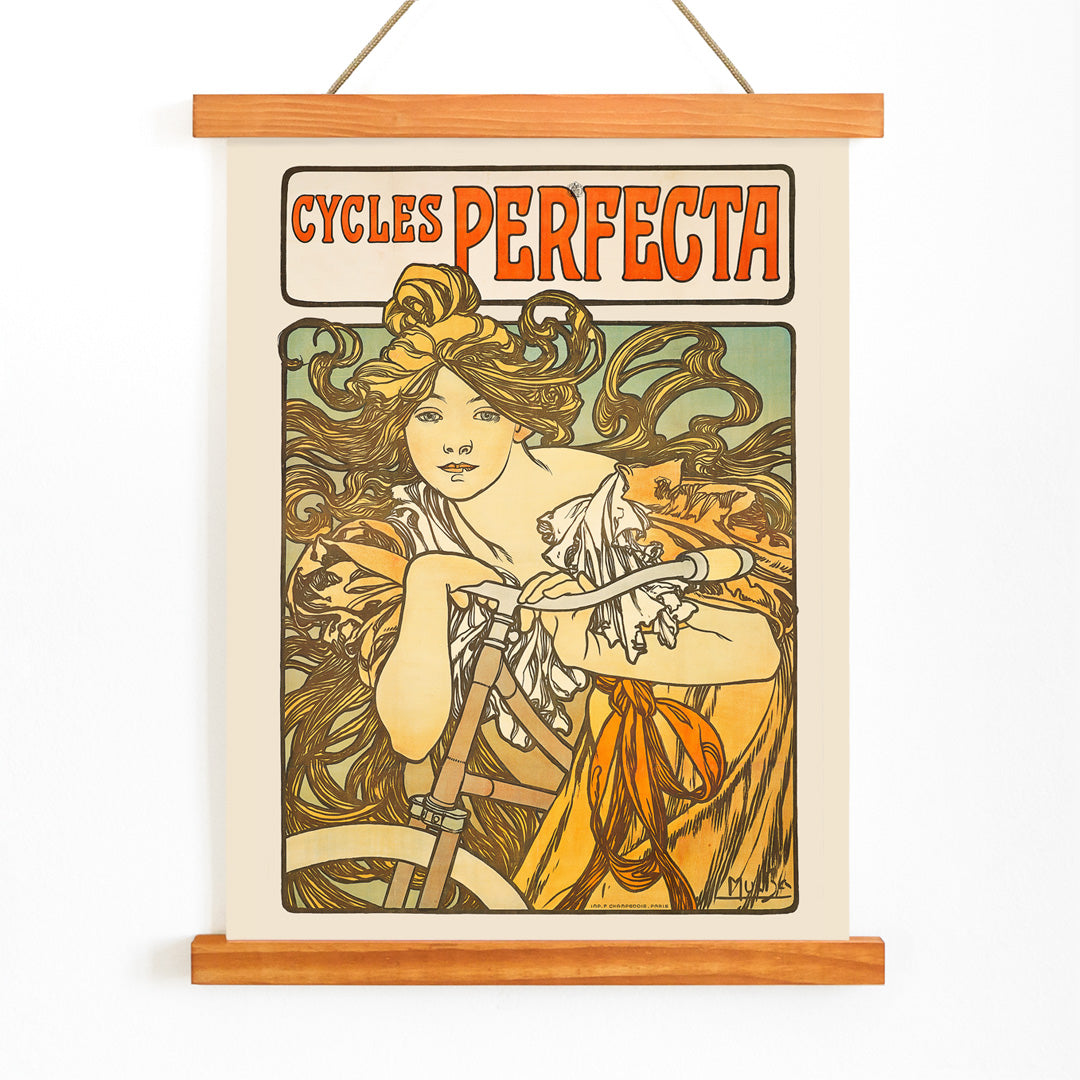
Cycles Perfecta was created during the Belle Époque, a period when bicycles represented innovation, personal freedom, and the excitement of modern life. Commissioned as an advertisement, the poster was designed to capture attention on busy Parisian streets and to associate the brand with elegance and aspiration.
In an age of rapid urbanization and growing consumer culture, such posters played a vital role in shaping public perception and brand identity. Today, it remains a celebrated piece among collectors of vintage advertising art and enthusiasts of cycling posters, reflecting the optimism and artistry of its era.
Style & Characteristics
Mucha’s Art Nouveau style is evident in the idealized female figure, surrounded by flowing hair, a radiant floral halo, and graceful organic lines. The composition integrates ornate lettering and decorative motifs, guiding the viewer’s gaze in harmonious curves that evoke movement and vitality.
The palette glows with warm oranges, yellows, and reds, contrasted by earthy browns, creating a sunlit, inviting atmosphere. The overall effect is both decorative and graphic, balancing softness with clarity, making it a striking choice for art lovers and design aficionados alike.
In Interior Design
This Art Nouveau poster brings a cultured focal point to living rooms, entryways, or creative workspaces. Its vintage print character pairs beautifully with walnut wood, brass accents, and textured materials like linen or rattan.
For a harmonious look, combine it with creamy whites, terracotta, ochre, or deep green tones to echo the artwork’s warm palette. It complements Parisian, eclectic, or classic interiors and can also serve as a richly ornamental statement in modern spaces.