


You may also like
-

L’Eau Poster
George Barbier · 1924 · Elegant Art Deco poster of waterside leisure in vivid blue with pink accents
Poster from £9 · Framed from £16
-

La Vasque Poster
George Barbier · 1914 · Elegant Art Deco bathing scene poster with cool blues and warm orange accents
Poster from £9 · Framed from £16
-

Falbalas et fanfreluches - Orgueil Poster
George Barbier · 1925 · Art Deco fashion poster with a poised woman in bold yellow and black tones
Poster from £9 · Framed from £16
-

Au Lido Poster
George Barbier · 1920 · Elegant Art Deco poster with elongated figures, parasols, and tranquil blue seaside
Poster from £9 · Framed from £16


-

"Very nice Posters. The quality is amazing and we received it very quickly !"
-

"A shop to visit absolutely. Huge selection of posters. We spent more than an hour there !"
-

"Perfect to find gift. Price are very good. An they can frame and pack it on site"


About the Artist
George Barbier was a renowned French illustrator and designer whose work epitomized the elegance of the Art Deco movement in the early twentieth century. Trained at the École des Beaux Arts, Barbier became celebrated for his sophisticated fashion plates, theatrical designs, and decorative illustrations that captured the spirit of postwar Paris. His collaborations with luxury publishers and couturiers made him a central figure in the world of Parisian high society and visual culture.
Barbier frequently used the pochoir technique, a meticulous stencil-based coloring process that produced rich, velvety hues and crisp lines. Collectors interested in famous artists and classic art will recognize his signature blend of modernity and classical grace in this striking vintage piece.
The Artwork
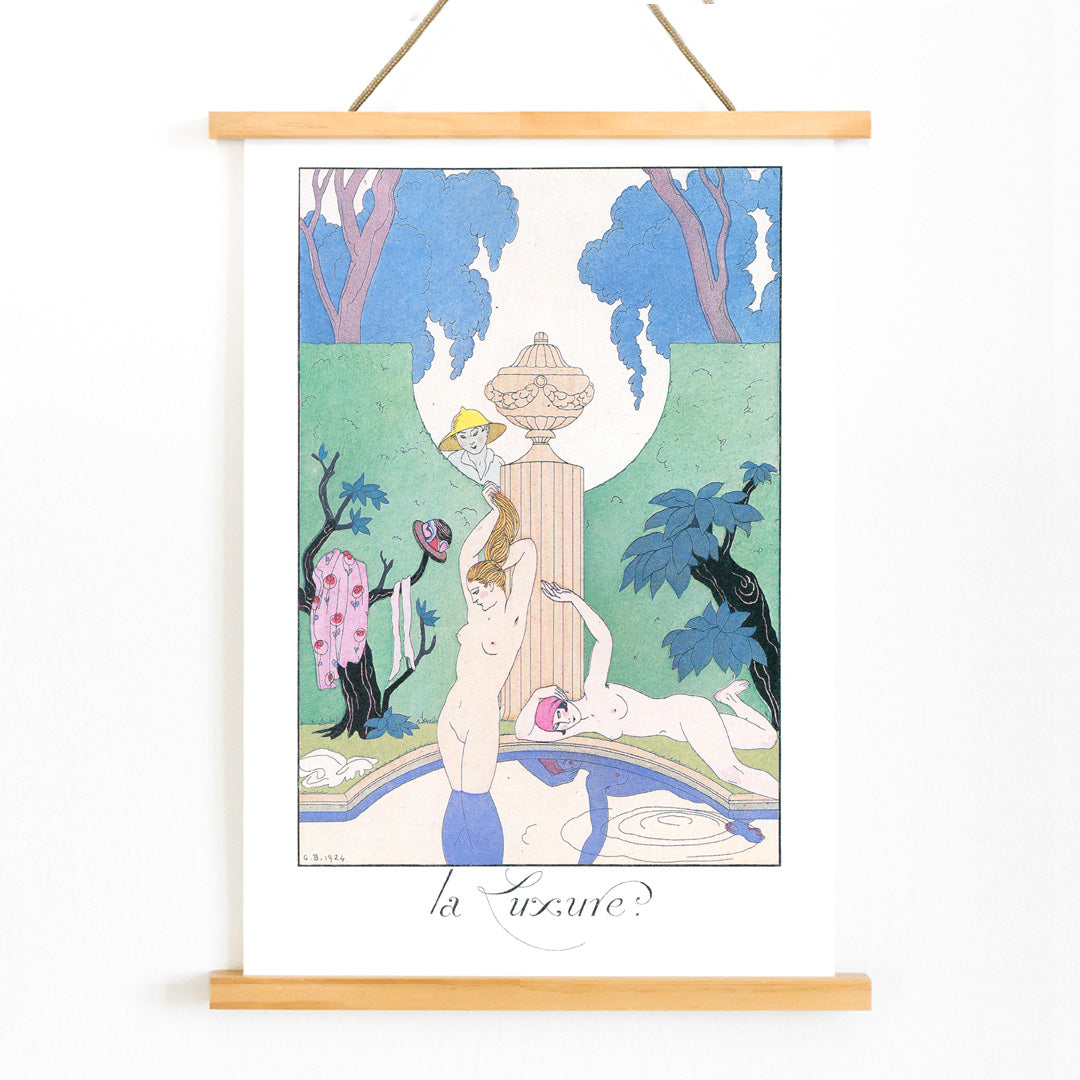
La Luxure, meaning lust, draws from the European tradition of allegorical art, where abstract concepts are personified to explore moral and philosophical themes. Created in the vibrant 1920s, this work reflects the era’s fascination with sensuality, pleasure, and the boundaries of social convention. In postwar Paris, such imagery resonated with a society eager to embrace both liberation and luxury, making Barbier’s interpretation both timely and provocative.
This piece was originally produced for a deluxe portfolio, intended for discerning collectors who appreciated the nuanced dialogue between caution and celebration that defines much of Art Deco’s erotic art. It stands as a testament to the period’s exploration of desire and sophistication.
Style & Characteristics
The print features elegantly stylized nude figures arranged in a harmonious, sculptural composition, surrounded by lush garden motifs. Barbier’s use of clean contour lines, flattened forms, and decorative patterning is characteristic of Art Deco, transforming the human body into an ornamental element rather than a realistic study.
The palette is dominated by cool blues and greens, accented with soft pinks that add warmth and contrast. The mood is intimate yet poised, balancing sensuality with refinement. The overall effect is one of curated elegance, making it a distinctive example of early twentieth-century erotic art.
In Interior Design
This Art Deco print brings a sense of sophistication and subtle allure to bedrooms, dressing rooms, or private lounges. Its refined color scheme pairs well with velvet, brass, lacquered wood, and mirrored finishes, echoing the glamour of the 1920s.
For a cohesive look, incorporate navy or sage textiles and blush accents to reflect the artwork’s hues. It complements other pieces from the erotic collection and integrates seamlessly into gallery walls that combine fashion illustration with minimalist framing.