


You may also like
-

Malus Domestica Poster
Amanda Almira Newton · 1908 · Refined apple botanical print with luminous red fruit and crisp leaves on white
Poster from £9 · Framed from £16
-

Prunus Persica Poster
Amanda Almira Newton · 1911 · Delicate peach botanical print with ripening fruit and soft leaves on white ground
Poster from £9 · Framed from £16
-

Pyrus Communis 2 Poster
Amanda Almira Newton · 1908 · Delicate pear botanical print with warm yellow skin, red blush, and crisp leaves
Poster from £9 · Framed from £16
-

Avocado Persea Poster
Amanda Almira Newton · 1916 · Refined avocado botanical print with luminous green skins and a softly painted cut fruit
Poster from £9 · Framed from £16


-

"Very nice Posters. The quality is amazing and we received it very quickly !"
-

"A shop to visit absolutely. Huge selection of posters. We spent more than an hour there !"
-

"Perfect to find gift. Price are very good. An they can frame and pack it on site"


About the Artist
Amanda Almira Newton was an American botanical illustrator renowned for her precise fruit studies created for the USDA in the early twentieth century. Her work bridged the worlds of art and agriculture, setting a benchmark for scientific illustration where aesthetic quality enhanced accuracy and utility.
This vintage botanical print is part of the tradition of pomological watercolor plates that meticulously documented fruit varieties for reference and education. Discover more of her distinctive work in the Amanda Almira Newton collection.
The Artwork
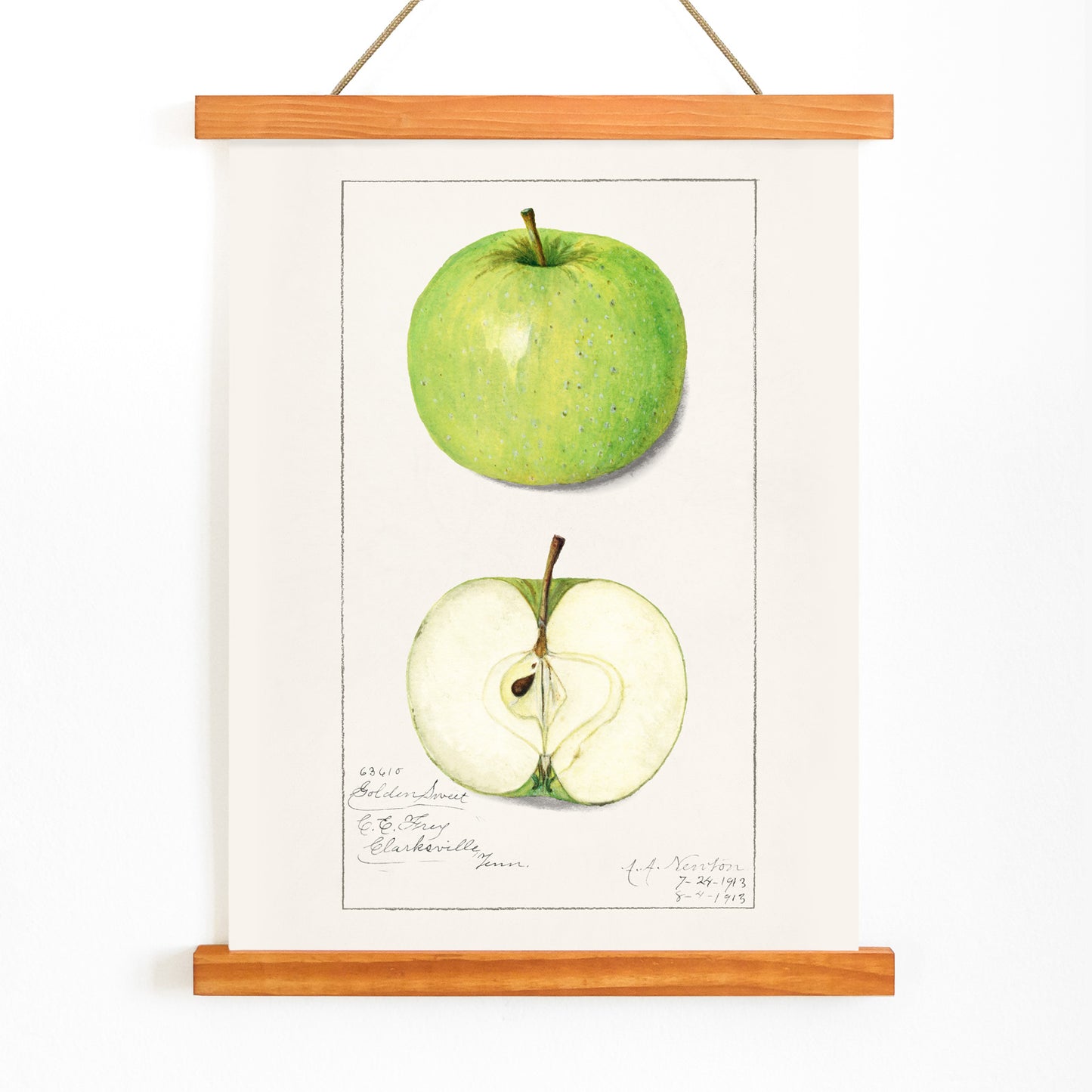
Malus Domestica, dated 1913, was produced during a period when agricultural institutions depended on detailed illustrations to standardize fruit varieties and facilitate communication among growers and researchers. Before color photography became widespread, botanical prints like this were essential tools for identification and record keeping.
The apple depicted here represents both the scientific drive to catalog nature and the everyday significance of this cultivated fruit. As a vintage print, it embodies the intersection of practical knowledge and visual artistry, preserving a moment in horticultural history.
Style & Characteristics
The artwork features a whole apple, a leafy stem, and a sliced cross section, all arranged with clarity on a pale background. This specimen-style composition emphasizes legibility and comparison, hallmarks of classic pomological illustration.
Newton’s controlled watercolor technique and fine outlines bring out natural greens, creamy whites, and warm brown stems. The overall mood is calm and precise, lending the print a timeless, refined quality that suits both traditional and contemporary interiors.
In Interior Design
This apple botanical print is a natural fit for kitchens, dining spaces, breakfast nooks, or pantry areas, where its food heritage resonates. It also brings a touch of vintage scientific charm to offices or libraries.
Pair it with light walls, oak furnishings, and linen textiles, or echo its botanical greens with ceramics and fabrics. For a cohesive display, combine it with other works from the botanical wall art selection or curate a gallery from the kitchen poster collection.