


You may also like
-

Portraits of an Actor Poster
Toyohara Kunichika · 1868 · Dramatic kabuki actor poster with bold makeup, patterned robe, and vivid color blocks
Poster from £9 · Framed from £16
-

Mimasu Gennosuke Poster
Utagawa Kuniyoshi · 1830 · Dramatic kabuki warrior art print with bold patterns and vivid red accents
Poster from £9 · Framed from £16
-

Portraits of an Actor in costume Poster
Toyohara Kunichika · 1870 · Dramatic kabuki actor print with bold costume patterns and intense gaze
Poster from £9 · Framed from £16
-

Often Playing Roles Poster
Toyohara Kunichika · 1880 · Dramatic kabuki samurai poster with intense gaze, patterned costume, and bold red accents
Poster from £9 · Framed from £16


-

"Very nice Posters. The quality is amazing and we received it very quickly !"
-

"A shop to visit absolutely. Huge selection of posters. We spent more than an hour there !"
-

"Perfect to find gift. Price are very good. An they can frame and pack it on site"


About the Artist
Utagawa Kunisada II was a prominent member of the Utagawa school in late Edo-period Japan, renowned for his mastery of actor portraiture. As a successor to the original Kunisada, he continued the tradition of yakusha-e, capturing the vibrancy of kabuki theater and the personalities of its stars. His work reflects the dynamic intersection of popular entertainment and visual art in nineteenth-century Tokyo.
Kunisada II’s prints remain valued today for their insight into kabuki culture and their technical excellence. For more from this artistic heritage, browse our Japanese-inspired wall art and discover additional prints by famous artists.
The Artwork
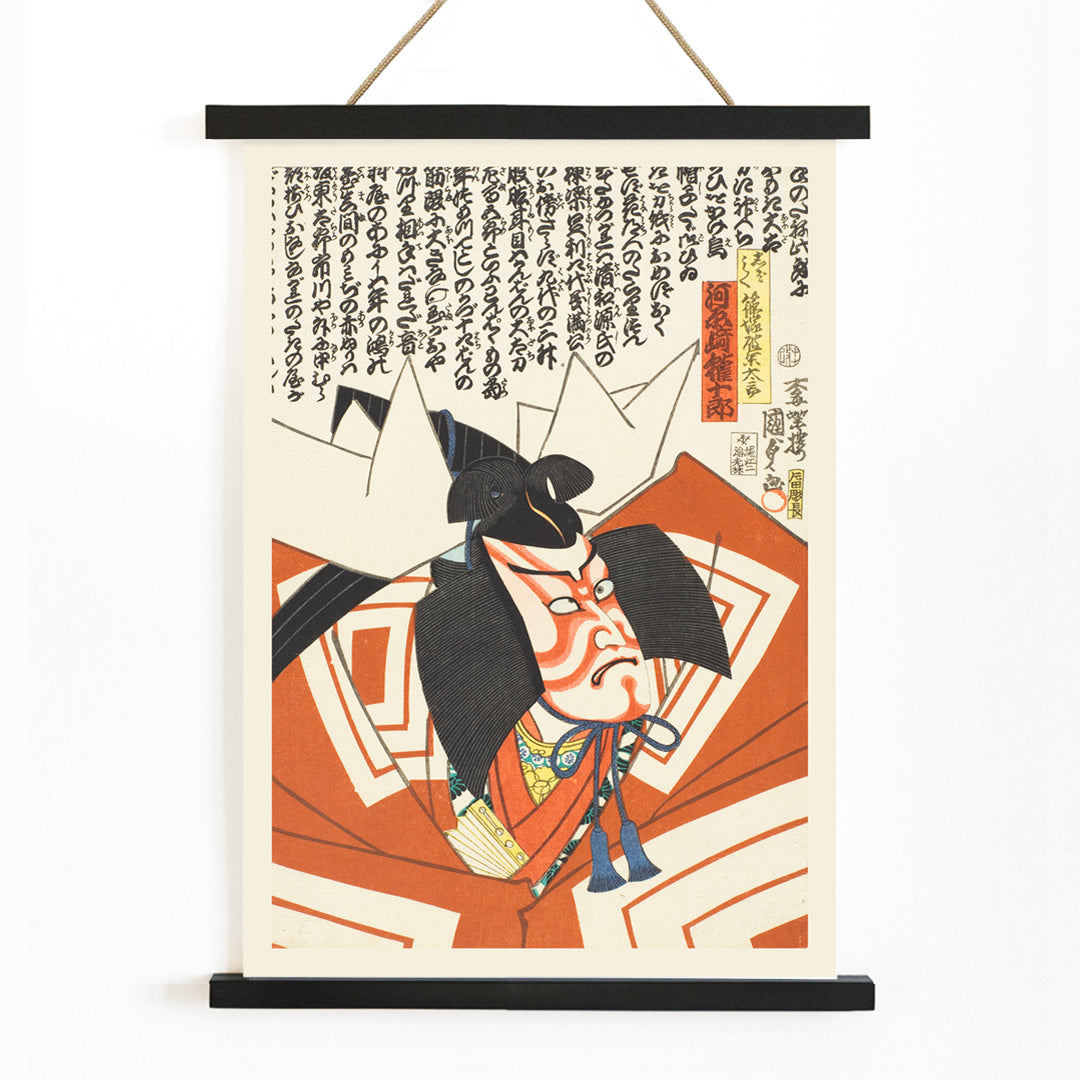
Created in 1864, this portrait depicts the famed kabuki actor Kawarazaki Gonjuro in a Shibaraku role, a signature part known for its dramatic entrance and display of moral authority. Such prints were produced as affordable mementos for theatergoers, serving as both souvenirs and tokens of admiration for celebrated performers. They offer a glimpse into the lively world of Edo-period entertainment, where actors were revered figures and their images circulated widely among fans.
This vintage print not only commemorates a specific stage moment but also reflects the broader cultural fascination with kabuki and the celebrity culture of its time.
Style & Characteristics
The composition is vertically aligned, focusing closely on the actor’s expressive face and elaborate stage makeup. Strong black outlines and flat, saturated color fields—particularly deep reds, yellows, blues, and crisp whites—define the image, characteristic of Japanese woodblock printing. Decorative costume patterns and small calligraphic panels add authenticity and visual interest.
The overall effect is bold and theatrical, with the actor’s intense gaze and dynamic pose commanding attention. This Japanese woodblock print stands out as a striking example of kabuki portraiture. Explore more tall formats in our vertical posters.
In Interior Design
This kabuki art print brings a sense of drama and cultural history to entryways, offices, or reading nooks. Its graphic clarity complements Japandi, minimalist, and mid-century interiors, providing a vivid focal point without overwhelming the space.
Pair it with black frames, natural woods, or lacquered accents, and echo its color palette with subtle touches in textiles or ceramics. Enthusiasts of Japanese art and theater will appreciate its unique presence and historical resonance.