


You may also like
-

Nude Poster
Václav Špála · 1937 · Modernist nude art print with bold blue background and simplified pink-beige forms
Poster from £9 · Framed from £16
-

Female Nude Poster
Carl Newman · 1917 · Expressive female nude art print with bold contour lines and warm color accents
Poster from £9 · Framed from £16
-

Three Acrobats Poster
Arthur Bowen Davies · 1920 · Lithe circus figures in a black and white art print with rhythmic modernist line
Poster from £9 · Framed from £16
-

Two figures Poster
Auguste Rodin · 1905 · Intimate figure study poster with fluid linework on warm beige paper
Poster from £9 · Framed from £16


-

"Very nice Posters. The quality is amazing and we received it very quickly !"
-

"A shop to visit absolutely. Huge selection of posters. We spent more than an hour there !"
-

"Perfect to find gift. Price are very good. An they can frame and pack it on site"


About the Artist
Gert Wollheim was a German modernist painter whose career flourished during the Weimar era, a period marked by artistic innovation and social transformation. His work is known for exploring the psychological dimensions of the human figure, blending expressive form with structural experimentation. Wollheim contributed to the vibrant dialogue between Expressionism, Cubism, and New Objectivity, helping to redefine figurative art in the early twentieth century.
Wollheim’s legacy is reflected in the ongoing appreciation for early modernist works, many of which can be found in our famous artists wall art and abstract poster collections.
The Artwork
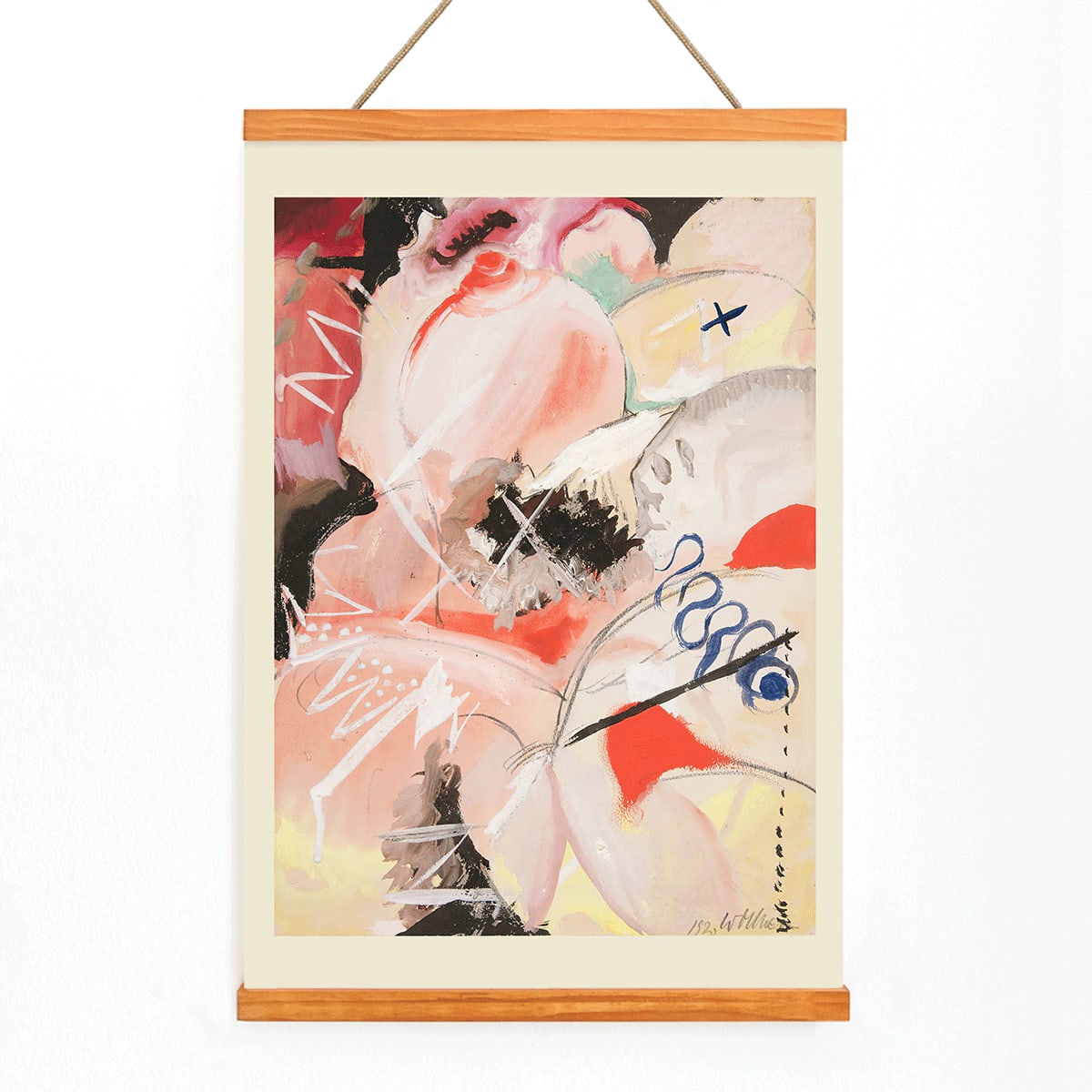
Painted in 1920, Female Figure emerges from a time when European artists were reimagining the human body in response to the upheaval of the First World War. Rather than idealizing the female form, Wollheim presents it as a subject of modern inquiry—capturing themes of identity, vulnerability, and transformation. This piece reflects the spirit of experimentation that defined the era, when artists sought new ways to express the complexities of contemporary life.
Female Figure also echoes the cultural landscape of Weimar Germany, where art circulated widely through prints and posters, influencing both avant-garde circles and everyday interiors. The work stands as a testament to the period’s search for meaning and renewal through visual language.
Style & Characteristics
The composition features an abstracted female form constructed from bold, interlocking shapes. Strong black contours define the figure, while vibrant reds and pinks evoke warmth and vitality. Cool blue tones and areas of stark white introduce contrast and rhythm, lending the image a sense of tension and movement.
The overall mood is energetic and assertive, characteristic of modernist figurative art that emphasizes structure and psychological presence over traditional softness. This artwork pairs harmoniously with the geometric sensibilities of our Bauhaus posters and the expressive color approaches found in Wassily Kandinsky art.
In Interior Design
This abstract figure poster serves as a striking focal point in living rooms, hallways, or creative workspaces, anchoring gallery walls with its dynamic presence. It complements minimalist, modern, and eclectic interiors, introducing a human element without relying on realism.
To harmonize with its palette, consider accents in red, black, or blue—such as textiles or decorative objects—while keeping surrounding surfaces neutral in white or beige. This piece appeals to collectors of vintage print aesthetics and admirers of early twentieth-century modernism.