


You may also like
-
Color Patchwork Poster
Paul Klee · 1914 · Playful abstract art print of patchwork squares balancing warm reds and cool blues
Poster from £9 · Framed from £16
Regular price From £6.00Regular price -
Hammamet Poster
Paul Klee · 1914 · Radiant abstract art print evoking Hammamet with mosaic blocks of red, blue, yellow
Poster from £9 · Framed from £16
Regular price From £6.00Regular price -
Senecio Poster
Paul Klee · 1922 · Mask-like geometric poster with warm orange and yellow blocks and steady eyes
Poster from £9 · Framed from £16
Regular price From £6.00Regular price -
The Harbinger of Autumn Poster
Paul Klee · 1922 · Modernist art print of an orange tree in playful blue and orange geometry
Poster from £9 · Framed from £16
Regular price From £6.00Regular price


-

"Very nice Posters. The quality is amazing and we received it very quickly !"
-

"A shop to visit absolutely. Huge selection of posters. We spent more than an hour there !"
-

"Perfect to find gift. Price are very good. An they can frame and pack it on site"


About the Artist
Paul Klee was a Swiss German modernist whose inventive approach helped shape the course of twentieth-century abstraction. After teaching at the Bauhaus, Klee developed a unique visual language that drew inspiration from music, poetry, and the rhythms of nature. His work is celebrated for its intellectual depth and gentle humor, bridging the gap between rigorous structure and playful imagination.
Klee’s legacy is closely tied to the experimental spirit of the Bauhaus and the broader interwar avant-garde. For those interested in this era, discover more in our Paul Klee collection and explore related works in our famous artists prints.
The Artwork
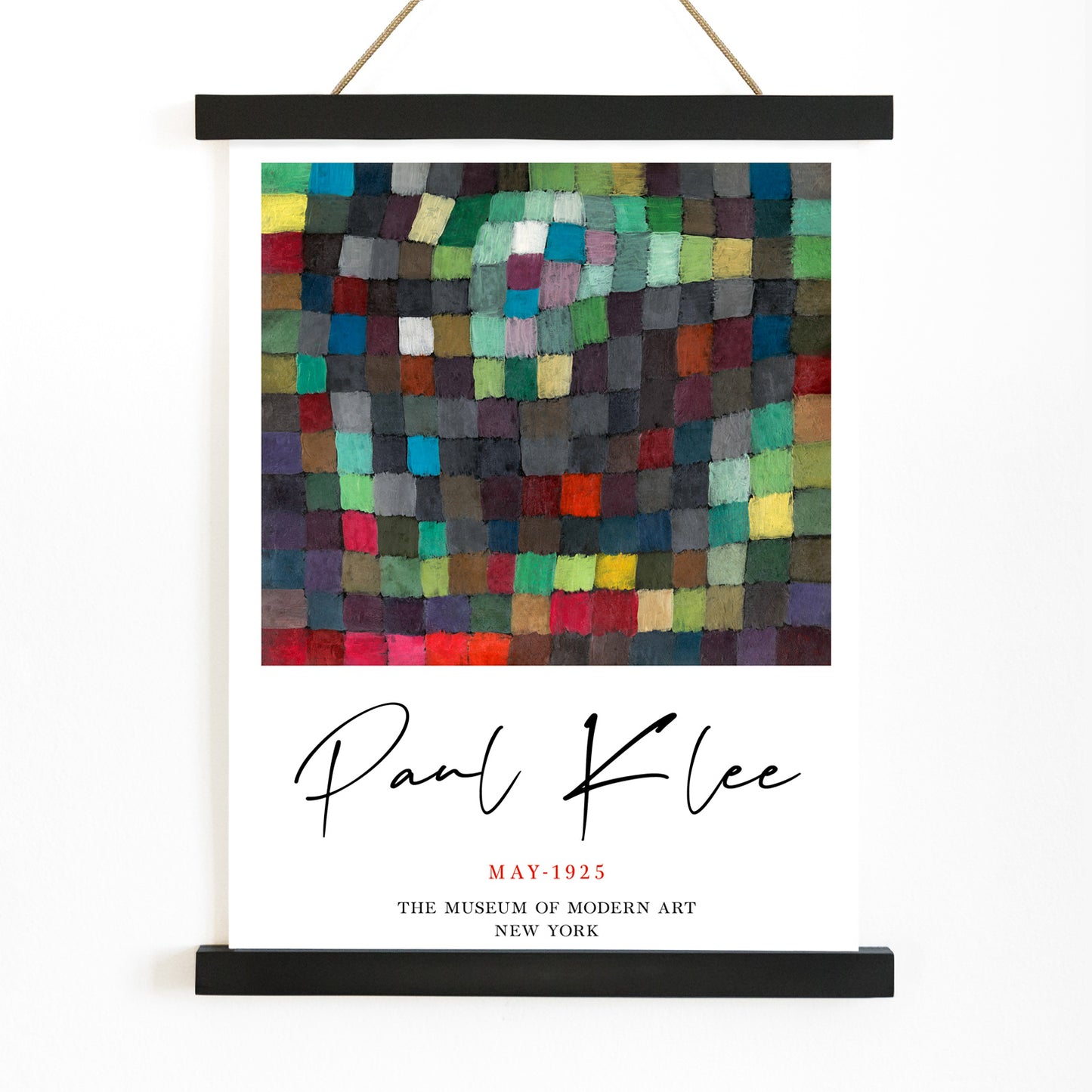
May Picture was created during a period when European artists sought new ways to convey sensation and harmony beyond traditional representation. Rather than depicting a literal scene, Klee’s work evokes the feeling of spring’s renewal through abstract means. The composition reflects his fascination with rhythm and structure, inviting viewers to experience the passage of time and the subtle energy of the season.
This piece embodies Klee’s belief in the poetic possibilities of abstraction, offering a contemplative space that resonates with those drawn to art as a form of quiet reflection and imaginative exploration.
Style & Characteristics
The artwork features a mosaic of small, square color blocks arranged in a loose grid, each outlined with fine black lines. Greens, reds, blues, and muted greys alternate in a measured cadence, creating a sense of gentle movement across the surface. The transitions between colors are soft, lending the geometric structure a light and layered quality.
The overall mood is playful yet balanced, with the careful arrangement of color and line producing a harmonious effect. This abstract composition exemplifies modern abstract wall art that rewards close observation with its subtle complexity.
In Interior Design
This abstract poster complements living rooms, creative studios, and home offices where a sense of calm focus is desired. It pairs well with mid-century furnishings, Scandinavian minimalism, and contemporary spaces that appreciate clean lines and thoughtful color accents.
To harmonize with its palette, consider echoing the greens and blues in textiles or decor, and introduce small red elements through accessories. Framed simply, it serves as a sophisticated art print within a gallery wall or as a standalone statement, especially alongside geometric or Bauhaus inspired decor.