


You may also like
-
Flowering Water Lily Poster
Ohara Koson · 1910 · Serene botanical print of pink water lilies floating among rounded lily pads
Poster from £9 · Framed from £16
Regular price From £6.00Regular price -
Blooming lotus flowers Poster
Ohara Koson · 1923 · Serene lotus flowers print with soft pink blooms and calm blue tones
Poster from £9 · Framed from £16
Regular price From £6.00Regular price -
Bijutsukai Pl.169 Poster
Korin Furuya · 1901 · Delicate butterflies drift above white hydrangeas in a serene Japanese floral poster
Poster from £9 · Framed from £16
Regular price From £6.00Regular price -
Lelies flowers Poster
Ohara Koson · 1927 · Serene botanical print of white lilies rising against a calm blue ground
Poster from £9 · Framed from £16
Regular price From £6.00Regular price


-

"Very nice Posters. The quality is amazing and we received it very quickly !"
-

"A shop to visit absolutely. Huge selection of posters. We spent more than an hour there !"
-

"Perfect to find gift. Price are very good. An they can frame and pack it on site"


About the Artist
Ohara Koson, also known as Ohara Matao, was a leading figure in early 20th century Japanese printmaking, celebrated for his poetic depictions of birds and plants. Working within the shin hanga movement, Koson revitalized traditional kacho-e (bird-and-flower pictures) by blending refined composition with a modern sensibility. His works are prized for their subtlety and quiet emotional resonance.
Many collectors are drawn to Ohara Koson prints for their ability to capture the essence of nature with understated grace. This 1930 print exemplifies his mastery in transforming a simple botanical subject into a timeless work of art.
The Artwork
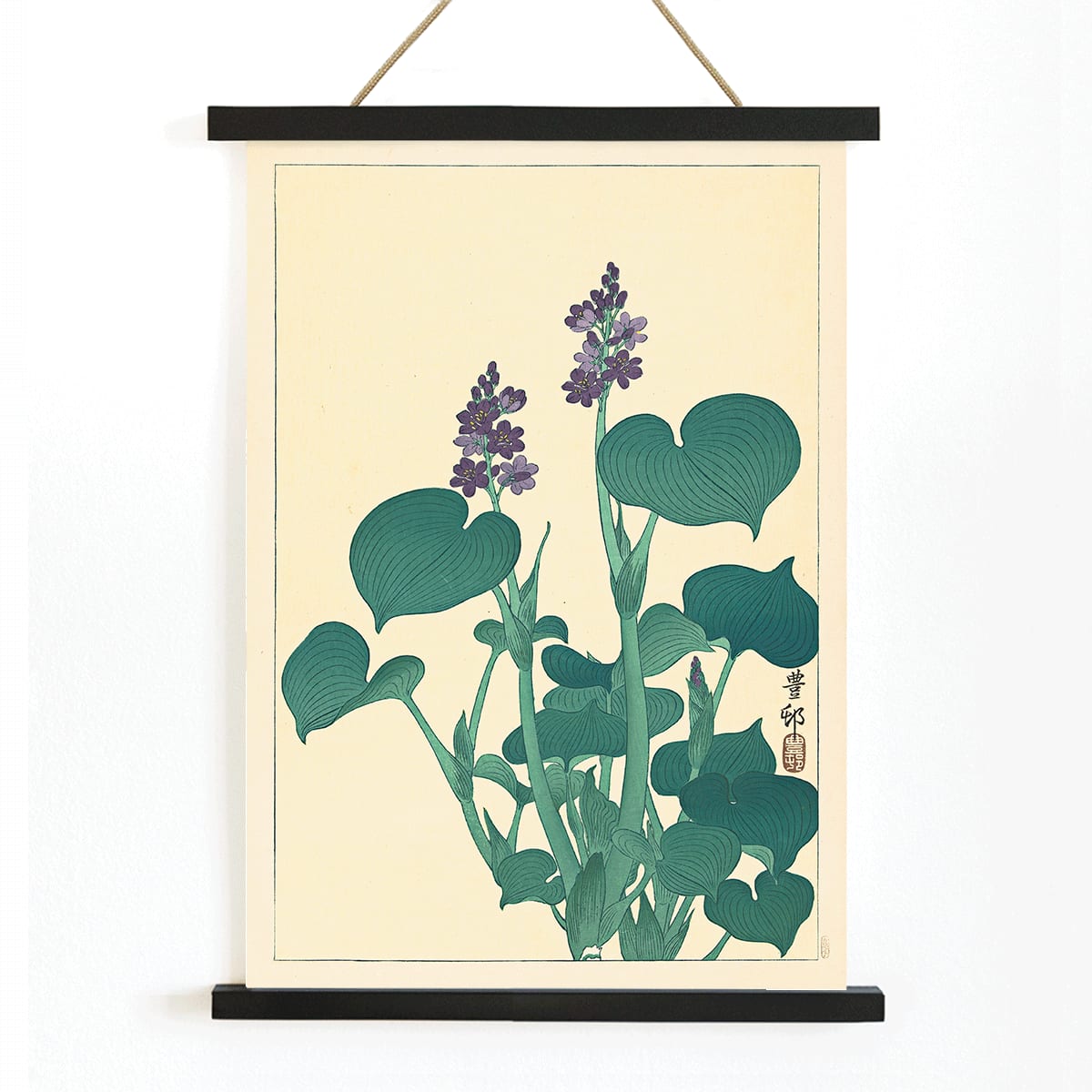
Flowering hosta reflects the enduring Japanese tradition of celebrating seasonal plants as symbols of transience and beauty. In the early 1900s, such images were produced as woodblock prints, making fine art accessible to a broad audience both in Japan and abroad. These works often served as quiet meditations on nature, offering viewers a sense of calm and reflection.
The hosta, commonly found in shaded gardens, is associated with tranquility and the gentle rhythms of summer. Koson's choice of this subject highlights his appreciation for everyday beauty, inviting viewers to pause and contemplate the elegance of a single stem in bloom. This print stands as a testament to the enduring appeal of botanical art in Japanese visual culture.
Style & Characteristics
This botanical print features a flowering hosta rendered with crisp outlines and delicate gradations of color, characteristic of traditional Japanese woodblock techniques. The composition is vertically oriented, with broad green leaves anchoring the base and slender stems rising to support soft purple blossoms.
A warm beige background enhances the freshness of the greens and the subtle violet tones of the flowers. The overall mood is serene and balanced, with ample negative space lending a sense of openness and calm. The print’s refined simplicity makes it a versatile piece for a range of interiors, especially for those who appreciate botanical wall art and Japanese aesthetics.
In Interior Design
This artwork brings a tranquil, contemplative touch to bedrooms, entryways, or reading nooks. Its vertical format is ideal for narrow spaces, and it pairs beautifully with natural materials and muted palettes. Consider displaying it alongside other Japanese prints or within a gallery of frames to create a harmonious and elegant display.